The Ins & Outs of Greek Ferry Travel
A mildly chaotic love letter to the Aegean.
There are two ways to arrive at a Greek island.
By air — efficient, beige, emotionally neutral.
Or by ferry — windswept, cinematic, slightly unhinged, and absolutely essential to the Greek summer experience.
If you’re travelling between islands like Santorini, Paros, Milos, Tinos or Mykonos, the ferry isn’t just transport. It’s theatre. It’s luggage Tetris. It’s iced coffee at sea. It’s a man yelling “PAROS? PAROS!” into the void while you clutch your tote bag and wonder if this is your stop.
Once you understand the rhythm, though, it becomes one of the great joys of island-hopping. Here’s everything I wish someone had told me before I first attempted to “casually” catch a Greek ferry.

1. Book Smart, Not Fast
Greek ferries come in two personalities:
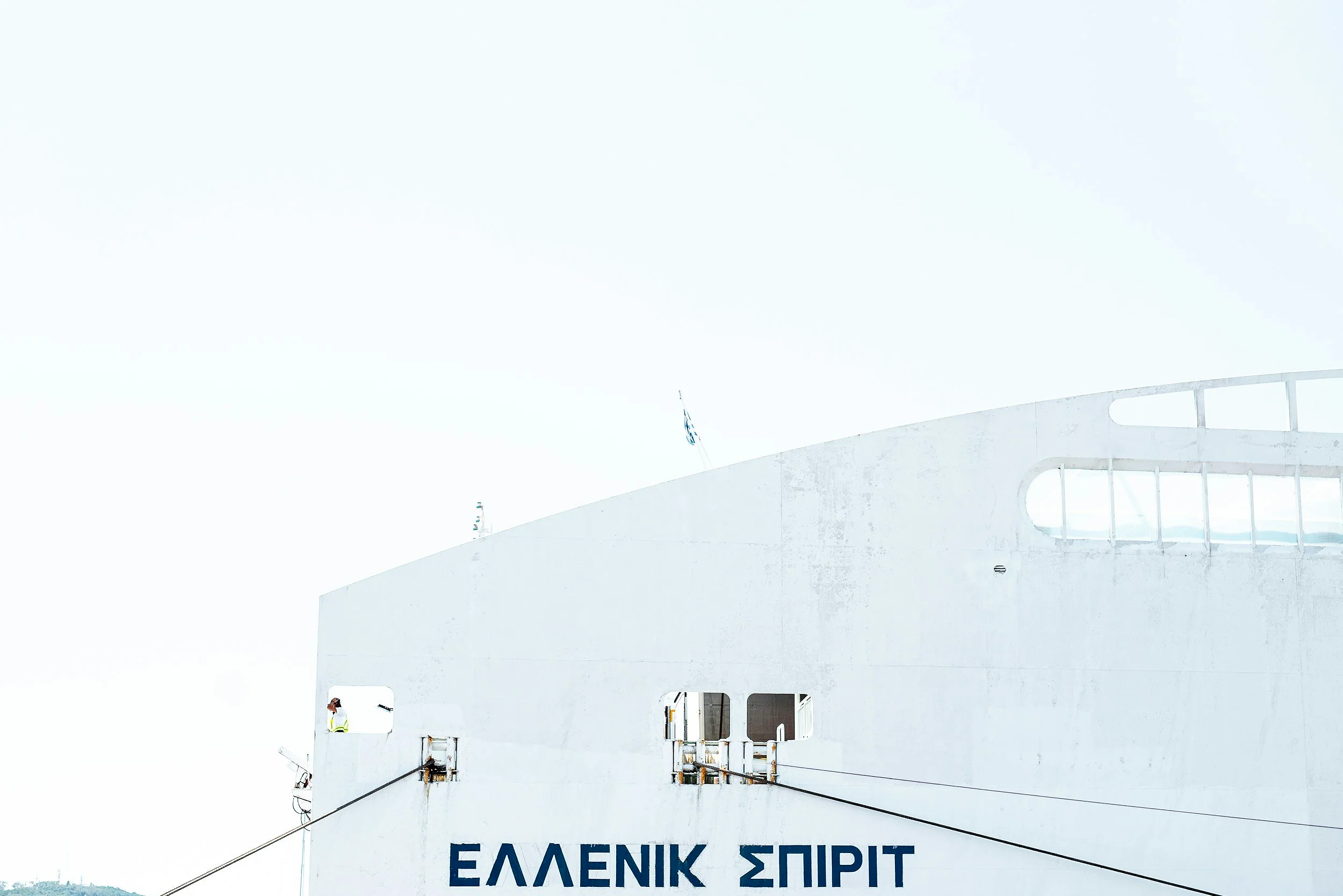
Conventional ferries (Blue Star, etc.) — slower, larger, more stable, outdoor decks, actual fresh air, less nausea.
High-speed ferries (Seajets, etc.) — faster, bumpier, airport-style interiors, occasionally humbling in rough seas.
If you’re prone to seasickness, choose the conventional ferry. The extra hour is worth your dignity and your breakfast.
Booking tip: Use operator websites or platforms like Ferryhopper. Screenshot everything. Ports are chaotic, WiFi is a myth, and you do not want to be frantically refreshing your email while a ferry horn blasts in your face.
2. The Port Is Not a Suggestion
Arrive 30–45 minutes early. Not because of check-in queues (there often aren’t any), but because:
Athinios Port in Santorini is essentially a cliff with delusions of grandeur.
Boarding begins the moment the ramp drops — no warning, no ceremony.
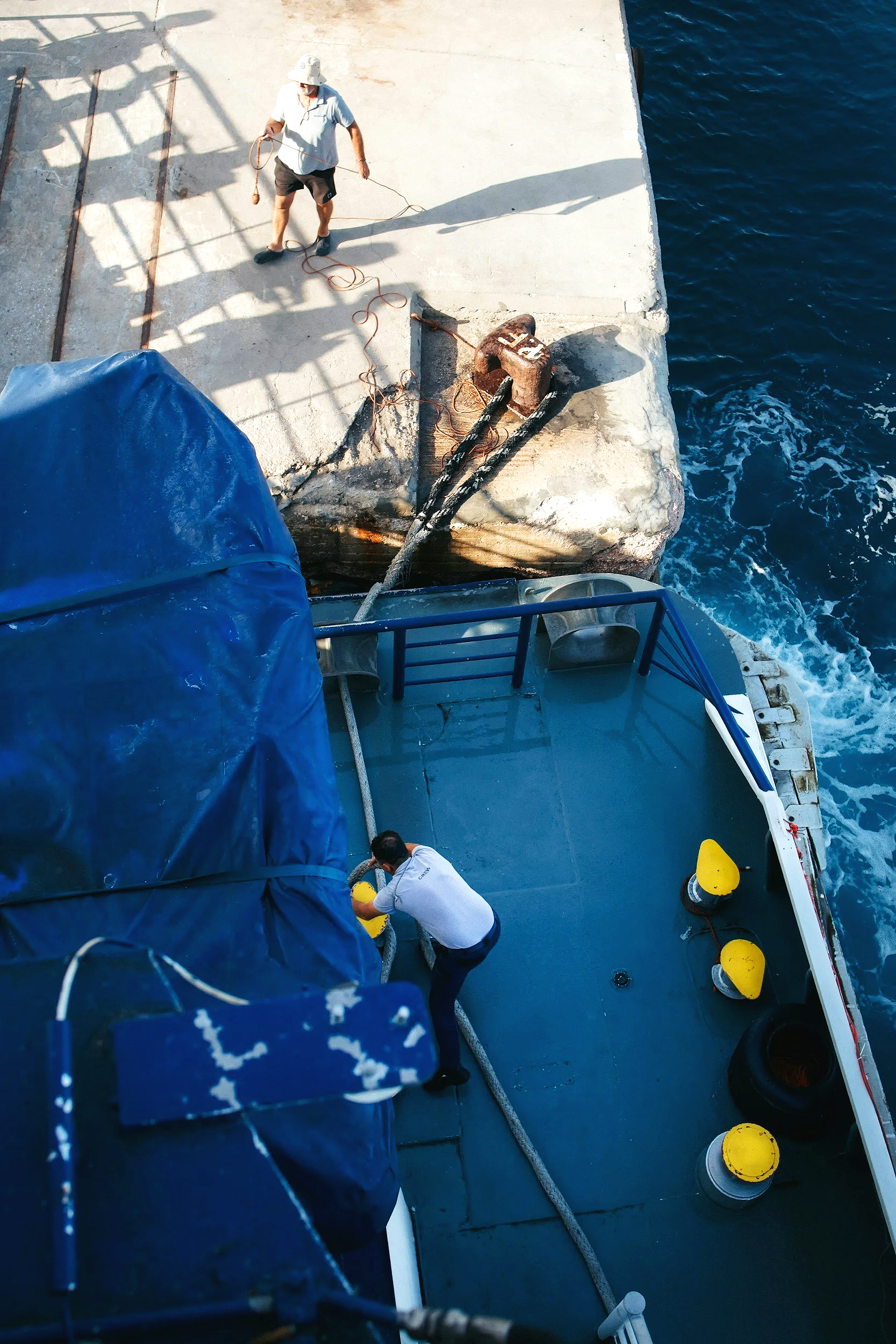
The choreography of buses, taxis, reversing trucks and shouting is… Mediterranean.
There are no boarding gates. You simply stand vaguely near your ferry and move when everyone else moves. It’s primal. It’s communal. It works.
3. Luggage: Release Control
This is the moment that separates the seasoned traveller from the first-timer.
Your suitcase will be placed in a communal luggage area in the hull. No tags. No compartments. No supervision. Just vibes.
And yet — it works flawlessly.
Luggage hacks:
Travel Light
Add a distinctive ribbon or tag.
Photograph your bag before boarding.
Keep valuables, passports, medication and chargers in a carry-on you keep with you.
This is not the time to pack your grandmother’s heirloom jewellery in your checked suitcase.
4. Seating Strategy Is Everything
On some ferries, seats are assigned. On others, it’s a free-for-all.
If unassigned:
Board early.
Head upstairs or outside immediately.
Avoid sitting directly under an air-conditioning vent unless you enjoy recreating a scene from Frozen.
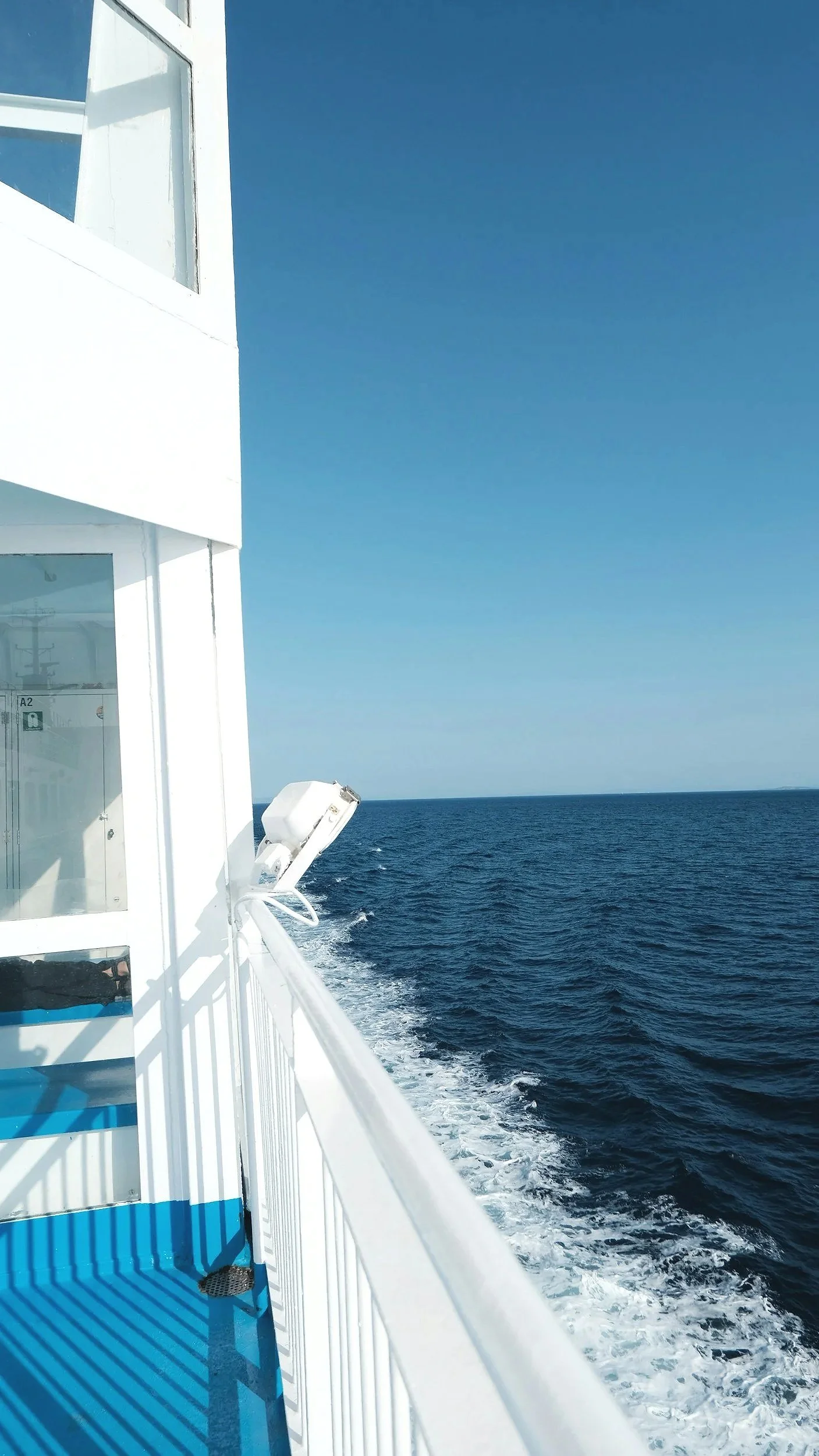
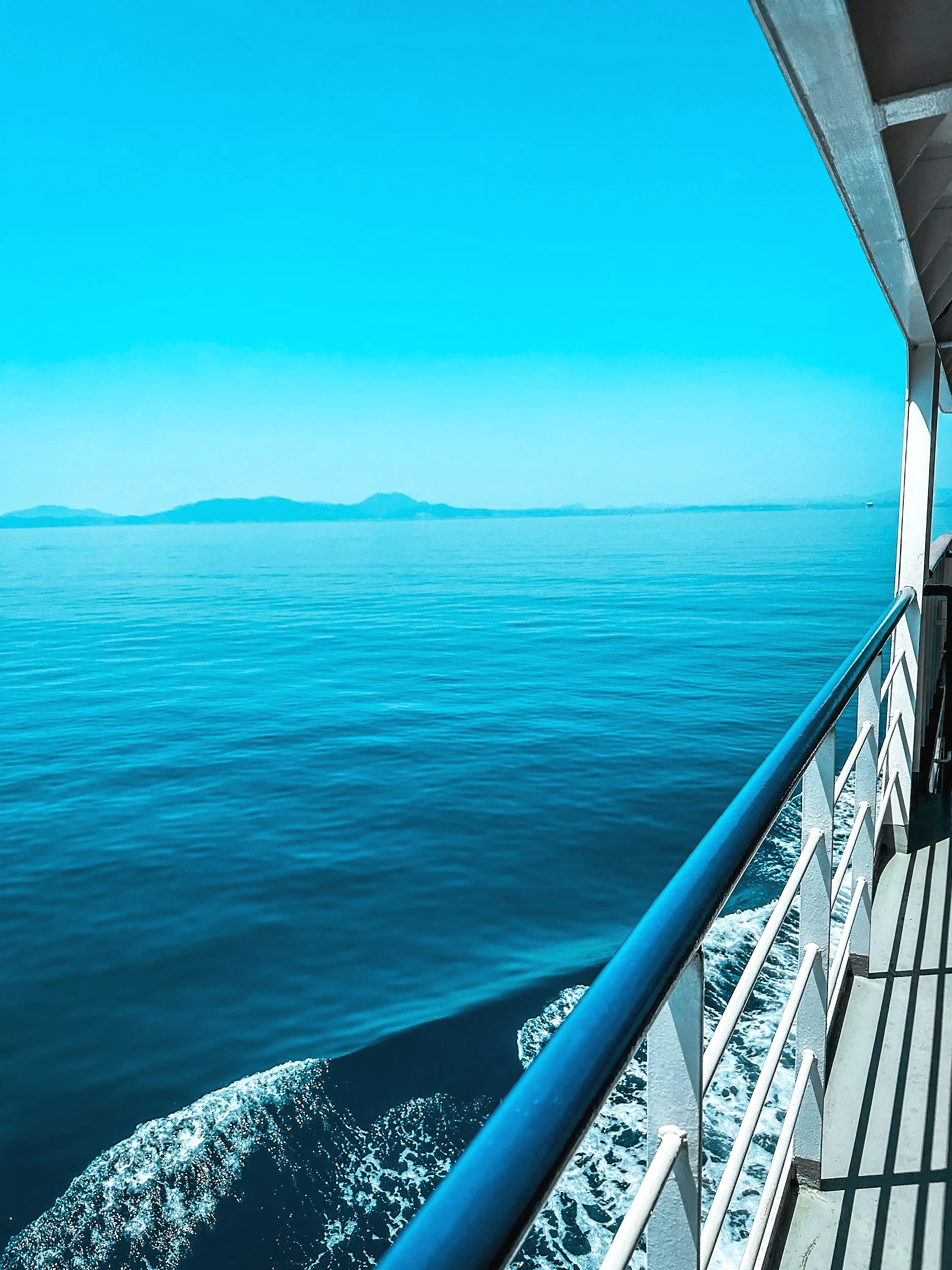
Outdoor decks are elite. Sunglasses on. Hair feral. Freddo espresso in hand. You’ll feel like you’re in a linen campaign shot by Slim Aarons.
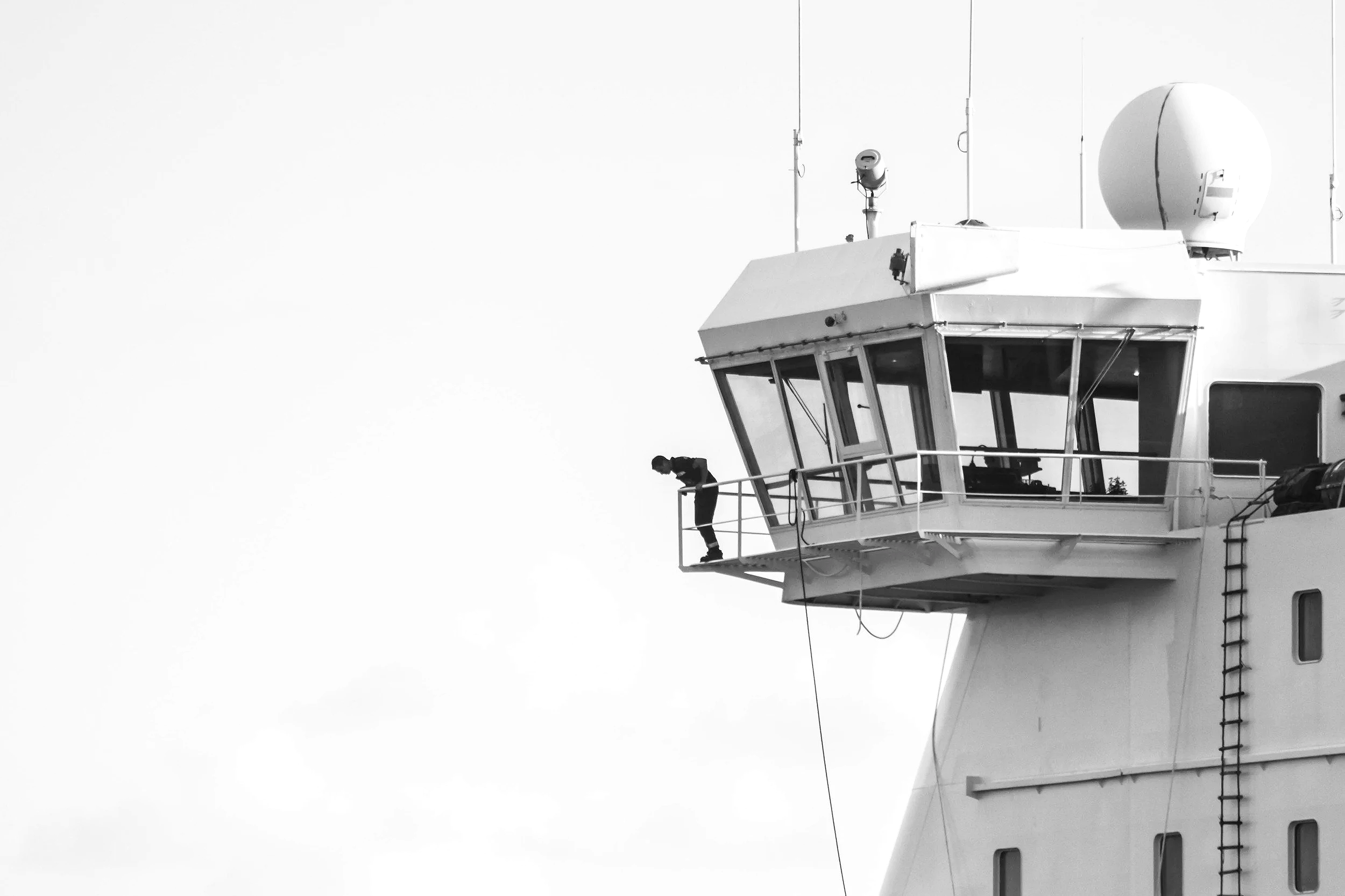
5. Seasickness: A Humbling Reality (and Why You Should Pack Your Own Bags)
Greek ferries can be dreamy… or they can be a floating centrifuge powered by Poseidon’s mood swings. Even the most iron‑stomached traveller can be caught off guard, especially on high‑speed ferries or during a meltemi day when the Aegean decides to show personality.
And here’s the truth no glossy travel blog will tell you:
Not all ferries carry vomit bags. Some carry none. Zero. Not a single one.
We learnt this the hard way — mid‑journey, mid‑meltemi, scrambling through our own bags like contestants on a game show, only to discover the emergency bag we found had… holes. Actual holes. A design flaw you only notice at the worst possible moment.
A few survival strategies:
Bring your own sick bags. Proper ones. The sturdy, hospital‑grade kind that respect physics.
Check for holes before you travel. A quick test can save you from a very memorable disaster.
Avoid eating before boarding if the sea looks rough. After our first ferry, not a single one of us touched food before the next departure. We became involuntary fasting monks of the Aegean.
Sit near fresh air. Outside decks are your friend. So is staring at the horizon like you’re contemplating your life choices.
Choose conventional ferries if you’re prone to motion sickness. They’re slower, but infinitely kinder.
Seasickness isn’t glamorous, but it’s survivable — and, with distance, even a little funny. The key is preparation… and bags without holes.
6. The Wind Is Personal
The Aegean meltemi is not a breeze. It is a personality.
If you sit outside:
Secure your hat.
Accept that your hair will become a mythological creature.
Know that every photo will look like a shampoo commercial directed by Zeus.
It’s part of the charm.
6. Snacks > Expectations
Ferries sell coffee, toasties and packaged snacks. They are… fine.
But you deserve better.
Snack strategy: Pick up pastries, spanakopita, sandwiches and water before boarding. Add something sweet. Add something salty. Island-hopping is hungry work.
7. Schedules Are Aspirational
Ferries can run late. They can change gates. They can be delayed by wind. They are rarely cancelled without reason, but flexibility is key.
Golden rule: Never book a tight flight connection after a ferry. Greece rewards patience, not precision.
8. Choose Routes Like a Strategist
Some ferries are direct. Others stop at multiple islands.
This means:
You may wake up thinking you’ve arrived when you absolutely have not.
Announcements may be in Greek first, English second.
Watching islands appear one by one is unexpectedly addictive.
If you’re hopping through the Cyclades, cluster geographically. Mykonos → Paros → Naxos → Santorini Not Mykonos → Milos → back to Paros → Santorini (unless you enjoy scenic inefficiency).
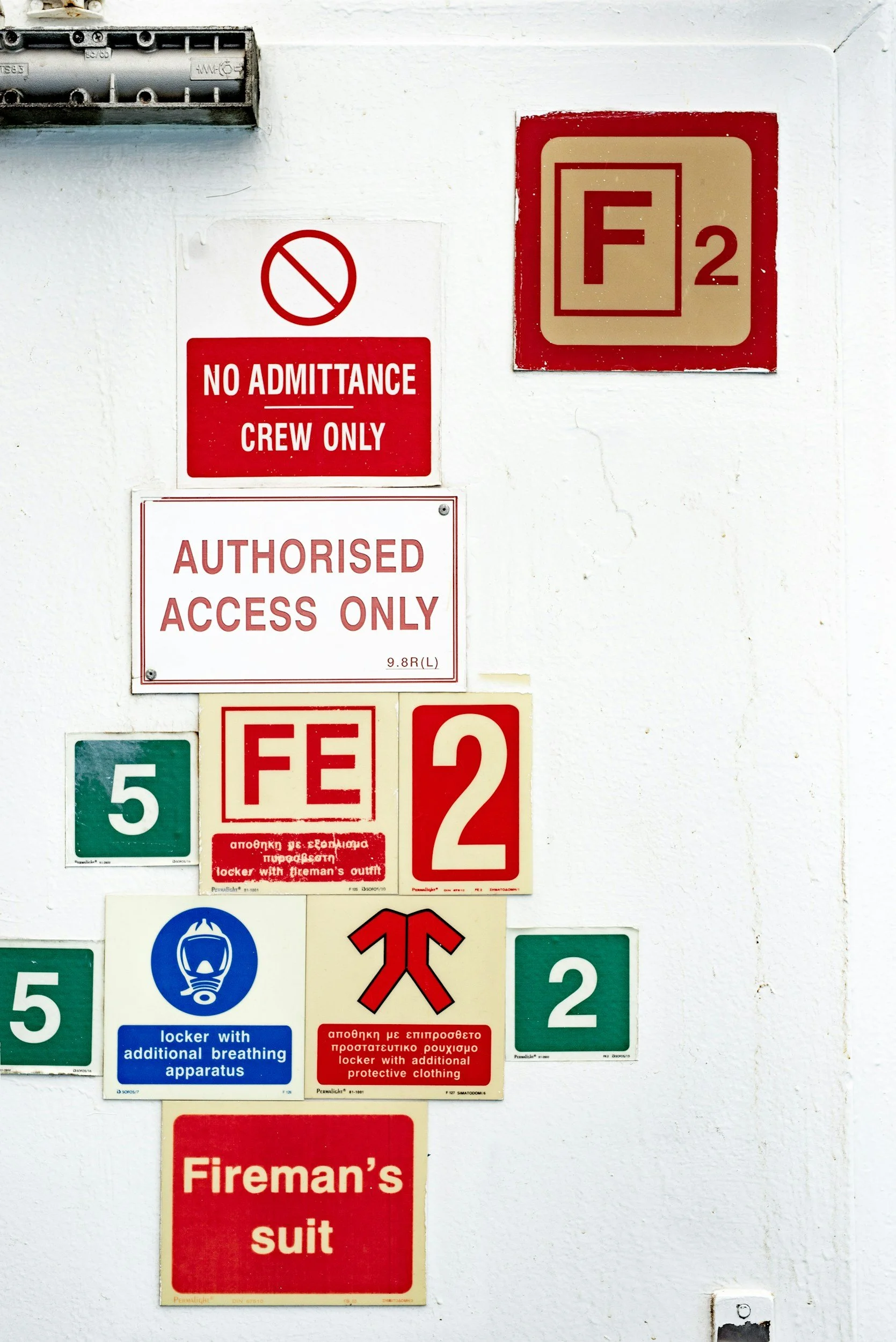
9. Mobility on Greek Ferries: What to Expect (and What Actually Helps)
Greek ferries are surprisingly well‑equipped for travellers with mobility challenges — but the experience varies wildly depending on the vessel, the port, the weather, and how many people are shouting at once. As a family who travels with mobility needs, we’ve learnt what works, what doesn’t, and what makes the journey smoother.
Most large ferries (especially Blue Star–style conventional ferries) offer:
Ramps for boarding — wide, stable, and managed by deckhands who are genuinely excellent at their jobs.
Lifts to passenger decks — usually reliable, occasionally slow, sometimes hidden behind a door that looks like a broom cupboard.
Accessible seating areas — more space, fewer stairs, and closer to lifts.
Accessible cabins on longer routes — larger bathrooms, wider doorways, and flat entryways.
High‑speed ferries can be trickier. They’re modern but more compact, with narrower aisles and fewer open spaces. Boarding is still ramp‑based, but the interior can feel tight during peak season.
What actually helps when travelling with mobility needs
Tell the staff as soon as you arrive at the port. They will guide you to the right boarding point and often bring you on first or last to avoid the crowd crush.
Ask for lift access immediately on board. Crew members will show you where it is — it’s not always obvious.
Choose conventional ferries when possible. They’re larger, steadier, and easier to navigate with mobility aids.
Stay near the lift or accessible seating area. It saves energy and avoids the “staircase bottleneck” when everyone disembarks at once.
Let the deckhands help. They are incredibly skilled at assisting passengers with mobility challenges — calm, confident, and used to every scenario imaginable.
The ports themselves: beautiful chaos
Ports like Paros, Naxos and Milos are manageable. Santorini’s Athinios Port, however, is… ambitious. It’s steep, busy, and full of movement. The good news is:
Buses and taxis pull right up to the ferry ramp, so you’re not walking long distances.
Staff will prioritise mobility‑challenged passengers when boarding and disembarking — you simply need to make yourself known.
There are flat waiting areas, even if the surroundings feel like a live‑action Greek tragedy.
Our lived reality
Travelling with mobility needs has made us hyper‑aware of the small things that matter — the angle of a ramp, the distance to a lift, the way a deckhand instinctively steps in to help without fuss. Greek ferries aren’t perfect, but they are far more accessible than people expect, and the crews are consistently kind and proactive.
With a little planning and a willingness to ask for help, island‑hopping becomes not just doable, but genuinely enjoyable — even with crutches, mobility aids, or limited walking capacity.
10. Cars & ATVs: The Advanced Level
If you’re bringing a vehicle, confirm your rental company allows ferry travel.
Vehicle boarding is a masterclass in spatial awareness. Stand back. Let the deckhands do their magic. They do not need help from enthusiastic Australians.
11. The Romance of Arrival
Nothing prepares you for sailing into Milos or Santorini.
White villages stacked like sugar cubes. Water impossibly blue. Everyone suddenly standing. Luggage anticipation in the air.
When the ramp drops, the exit is swift and decisive. Have your bag ready. Move with purpose. The island is waiting.
Final Thoughts
Greek ferries are not polished. They are not luxury yachts. They are functional, slightly chaotic, deeply charming vessels that connect some of the most beautiful islands on earth.
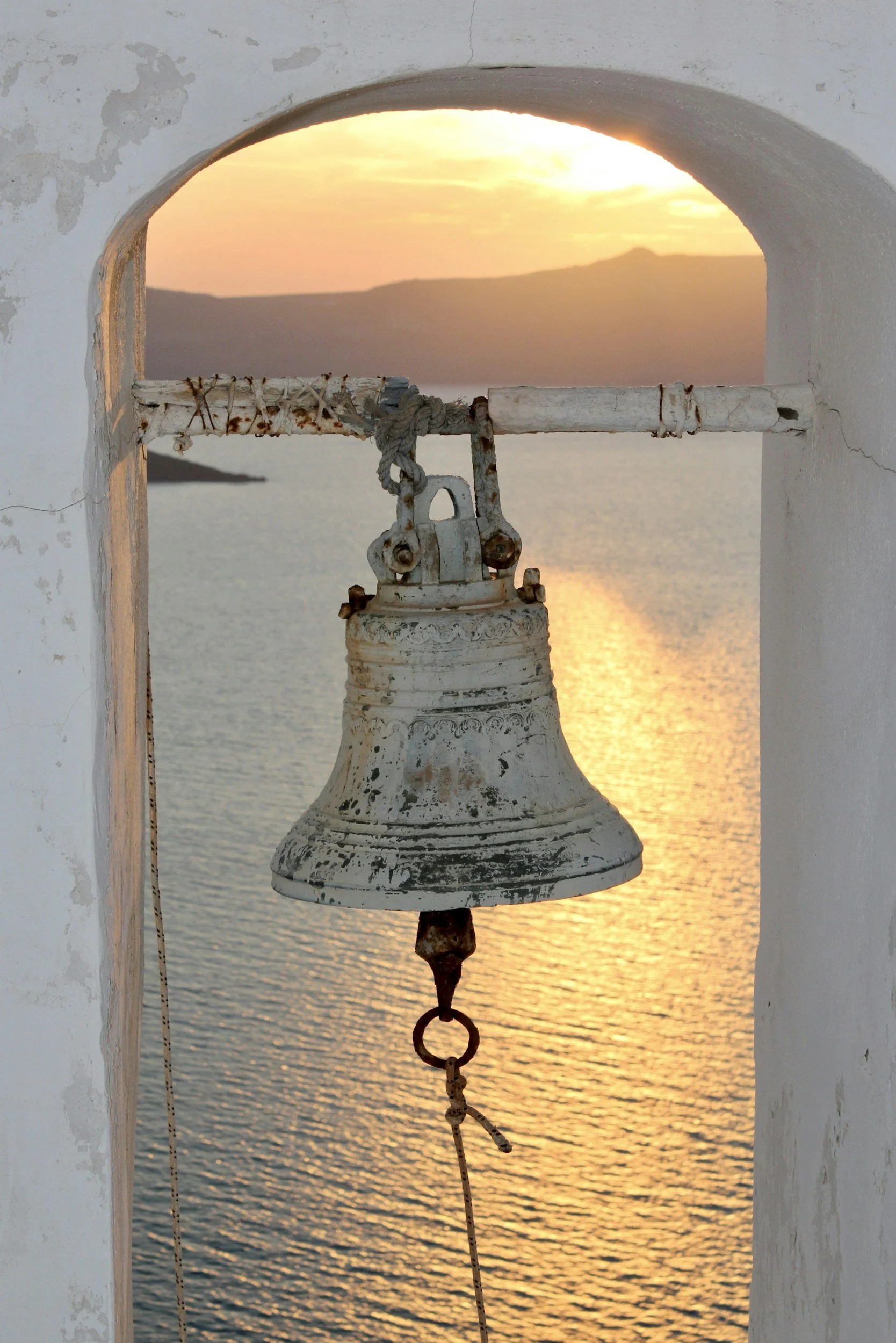
They force you to slow down. To look at the horizon. To share space with strangers. To surrender to the rhythm of the Aegean.
And somewhere between the espresso, the wind, the suitcase pile and the first glimpse of your next island — you realise this is the best part.