A Morning in Montmartre
There is a particular kind of magic reserved for the mornings when you land in Paris before the city has properly opened its eyes. The airport still clings to the night, the sky a soft, uncertain grey, and yet there is a spark — that unmistakable Parisian promise — that pulls you forward. By 7am we’ve dropped our bags at the hotel, splashed our faces with cold water, and slipped into an Uber bound for the highest point in the city. Montmartre is waiting.
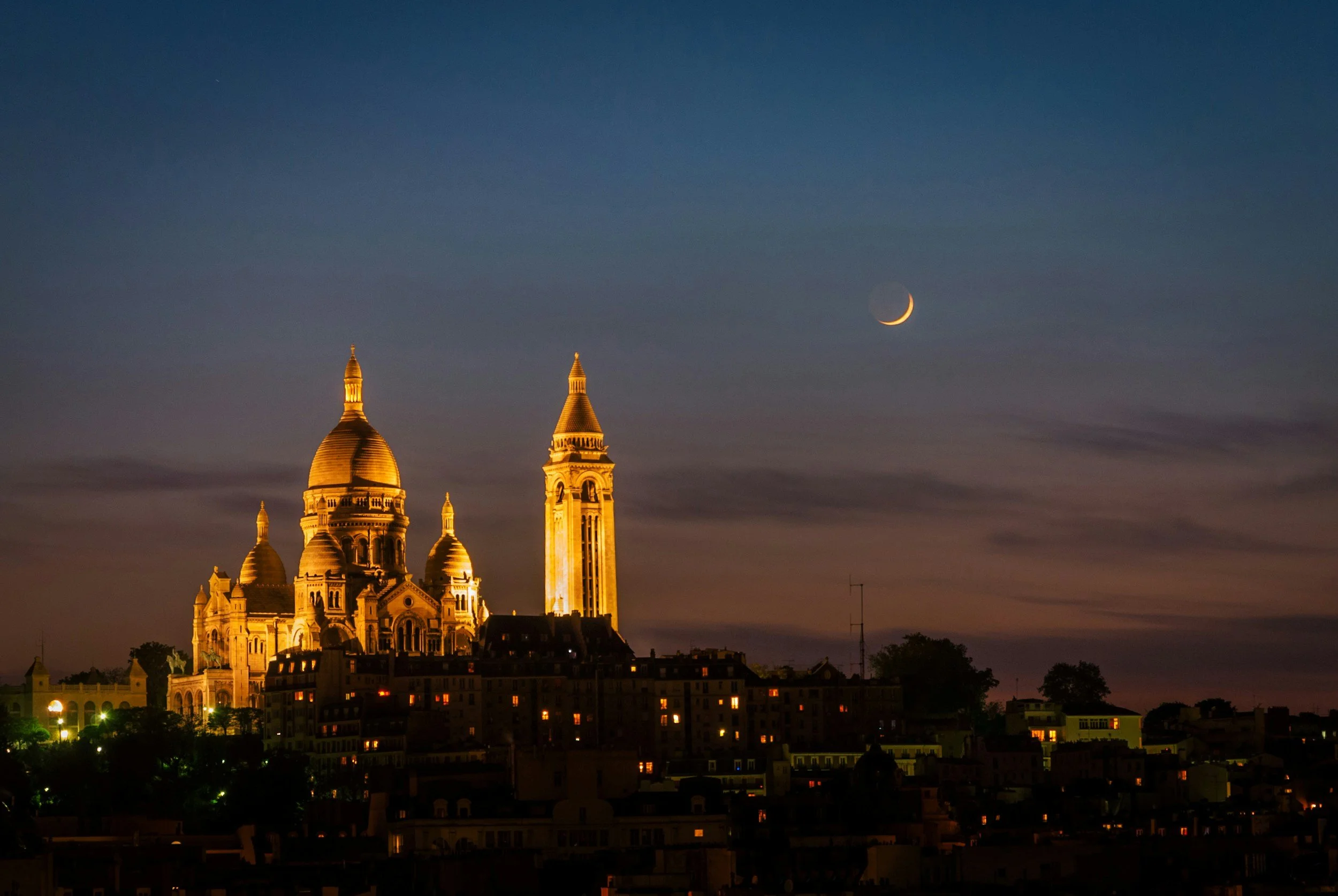
Sunrise at Sacré‑Cœur
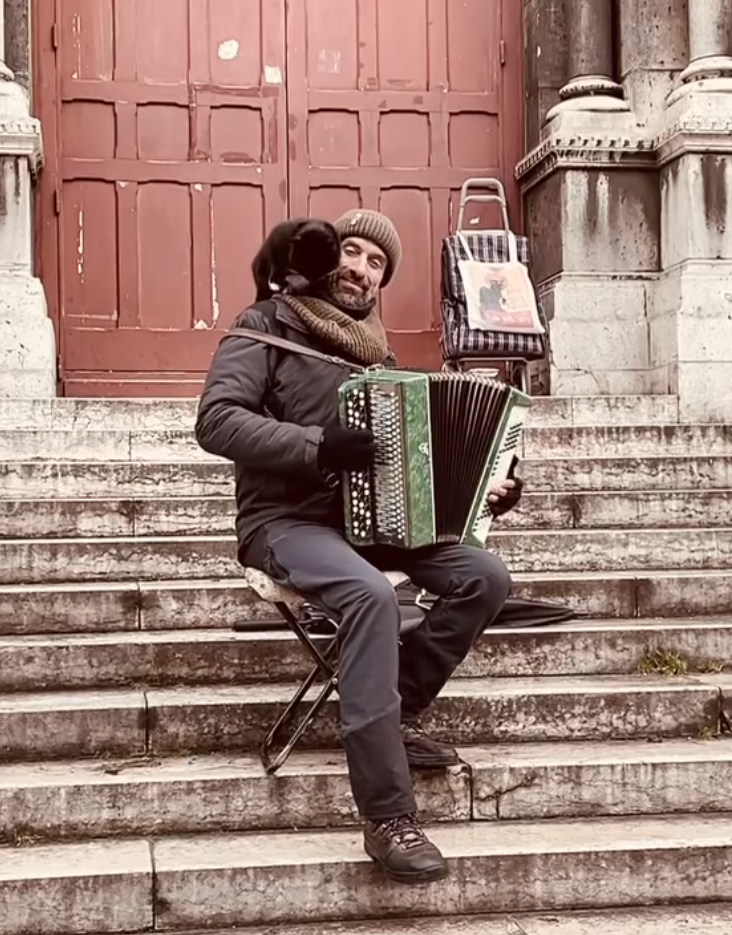
The basilica appears slowly, like a pale apparition at the top of the hill. At this hour, Sacré‑Cœur belongs to the few: the early‑rising locals, the jet‑lagged romantics, the travellers who know that Paris rewards those who greet her first light. We climb the final steps just as the sky begins to blush, the domes glowing like porcelain warmed from within.
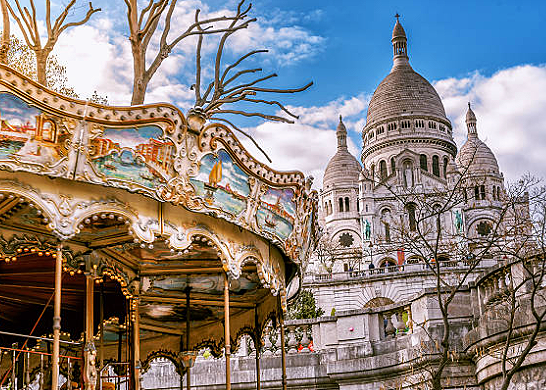
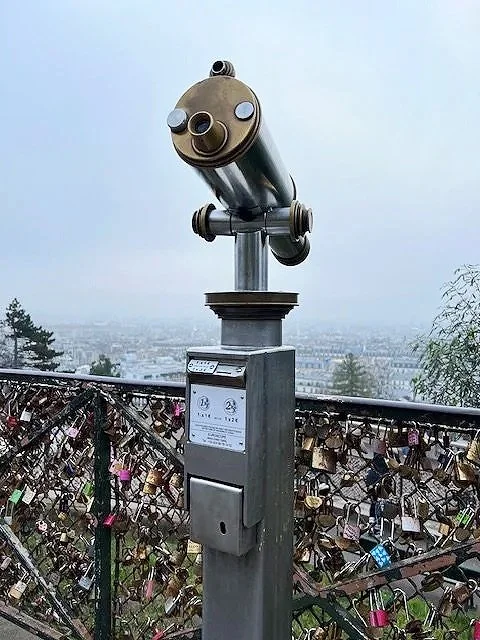
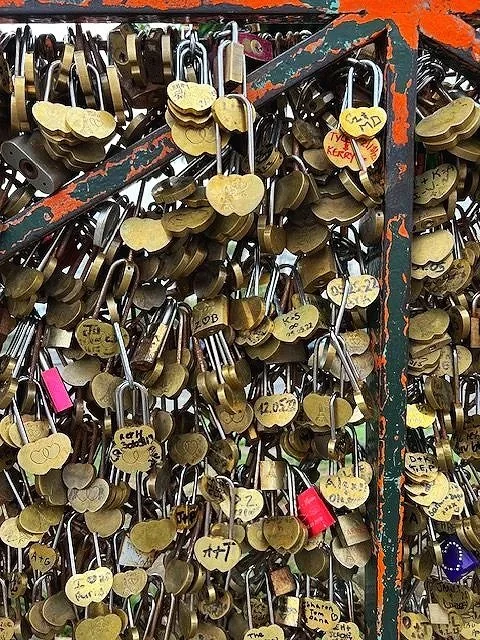
Inside, the Christ of Glory mosaic shimmers in the half‑light — a quiet, golden spectacle that feels almost private. Outside, the Bridge of Locks is still empty, the metal cool beneath our hands. To the right, the famous Sinking House leans playfully, a trick of perspective that never fails to delight. Down below, the carousel at Square Saint‑Pierre waits in soft colours for the day to begin.
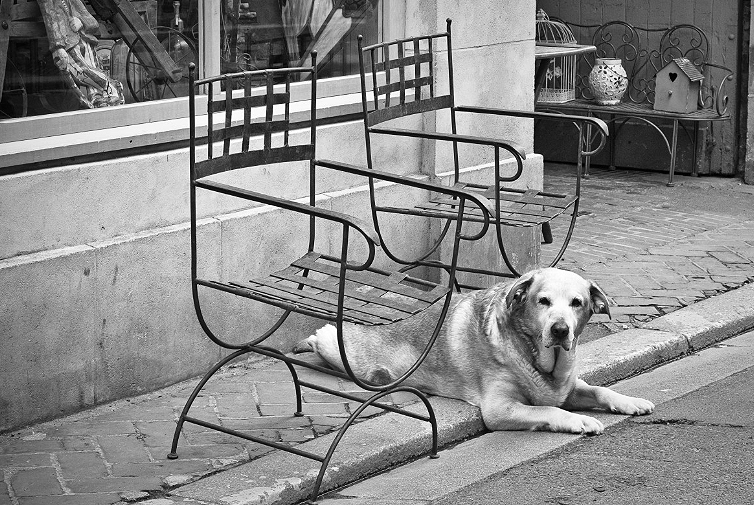
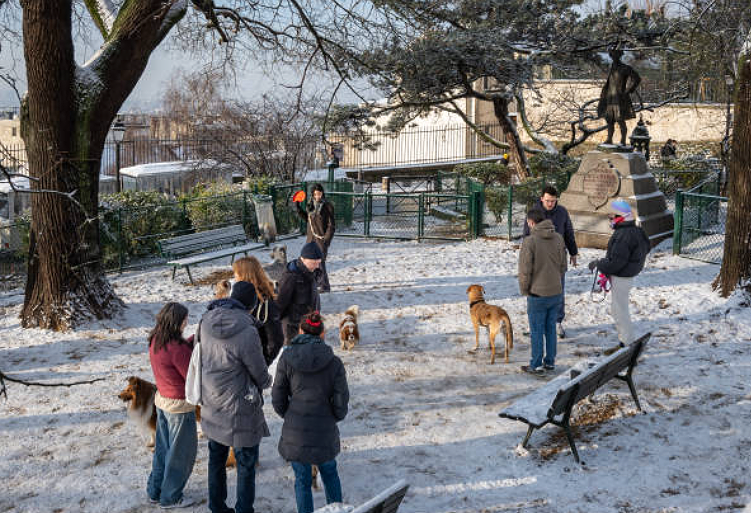
Just north of the basilica, the neighbourhood is already stretching awake. We always pause at the little dog park tucked behind the hill, where the locals gather with their terriers, retrievers, and scruffy Parisian mutts. There’s something grounding about it — the laughter, the clipped French commands, the dogs chasing each other through the morning light. It’s a tiny, joyful window into everyday Montmartre life, and we never miss it.
The Village Behind the Basilica
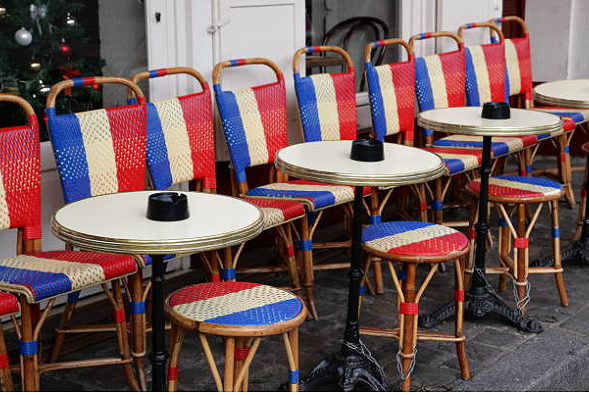
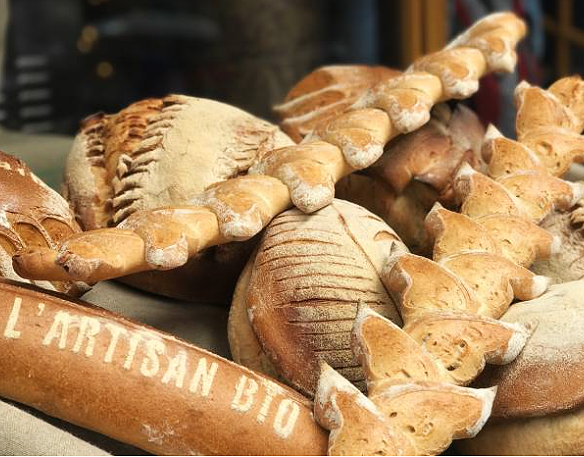
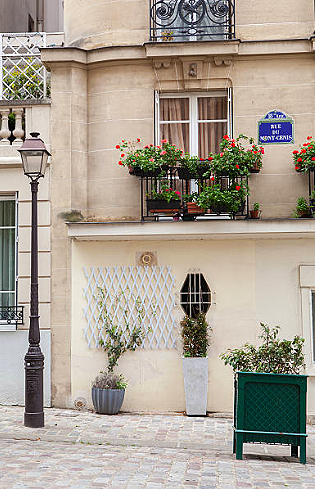
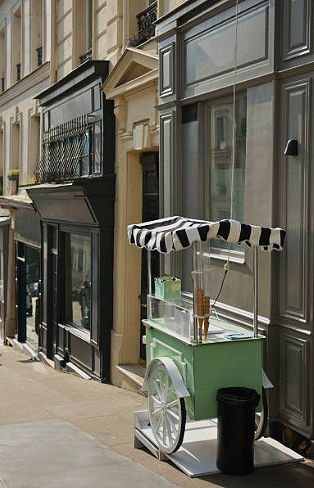
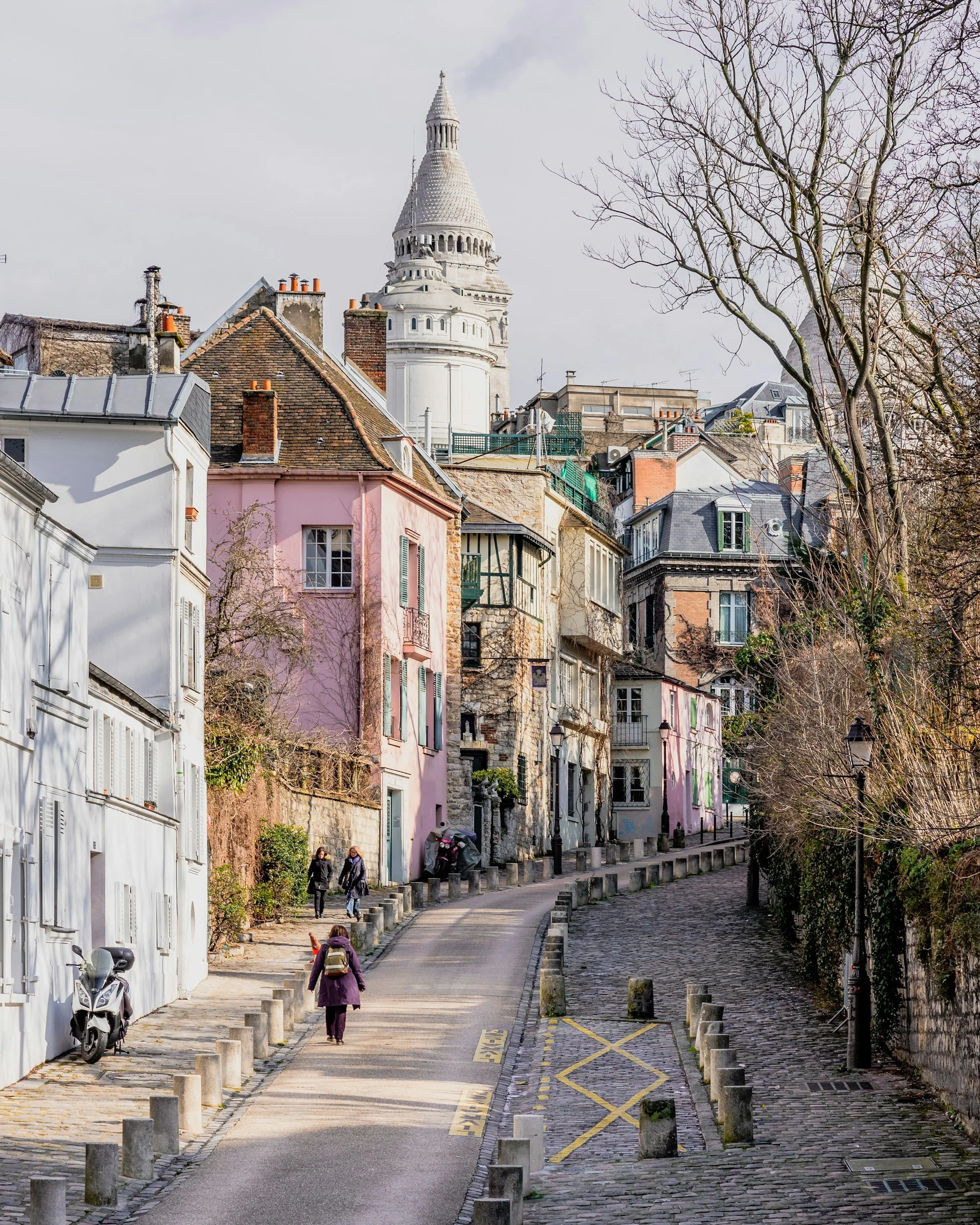
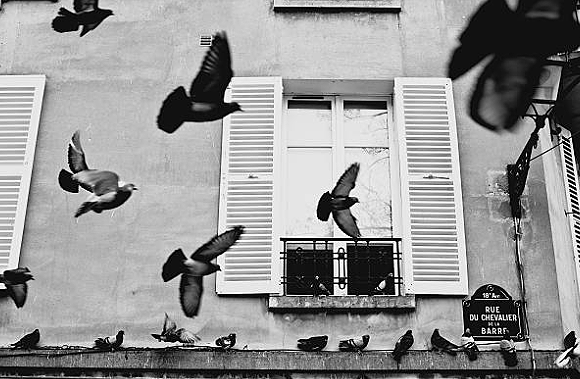
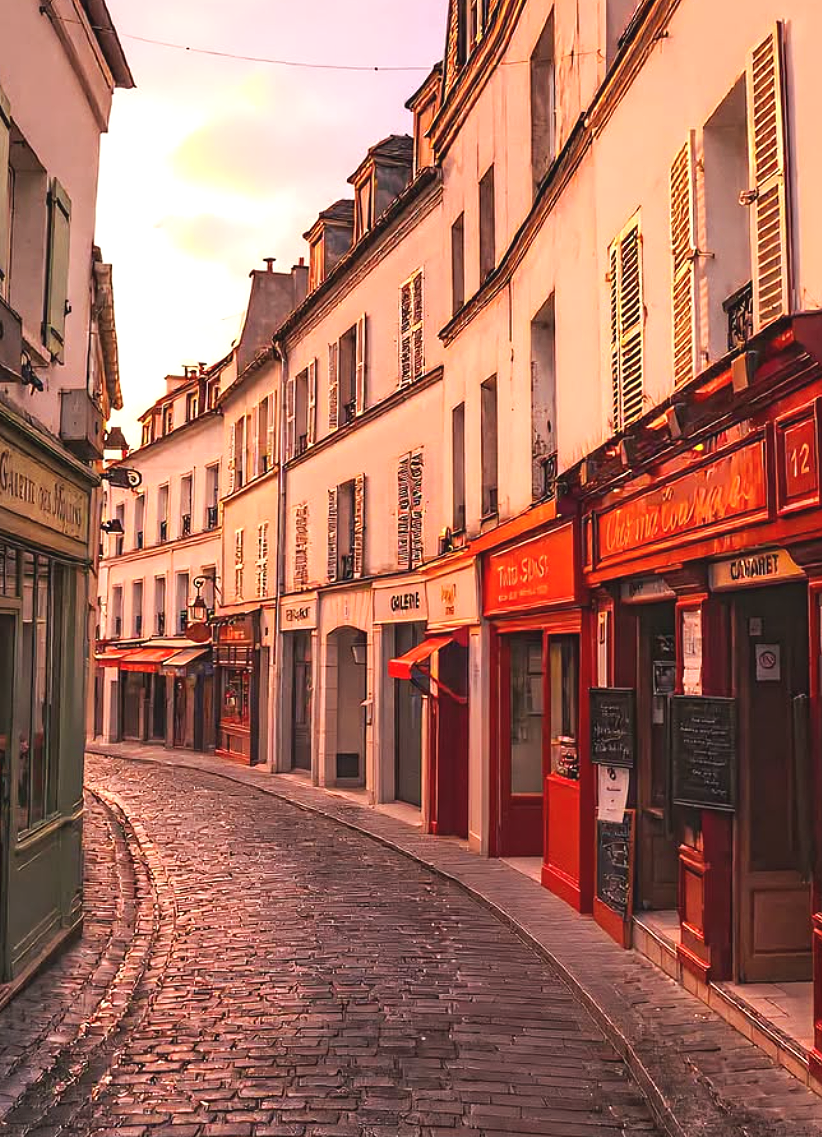
From here, we slip into the quiet backstreets behind Sacré‑Cœur — the true village heart of Montmartre. Along Rue du Chevalier‑de‑La‑Barre, the shutters are just beginning to open, revealing tiny épiceries, corner cafés, and bakeries setting out their first trays of croissants. Rue du Mont‑Cenis hums softly with locals picking up their morning baguettes, while Rue Lamarck curves elegantly downhill, lined with neighbourhood restaurants still smelling faintly of last night’s dinner service.
Through the Vineyards and the Prettiest Streets
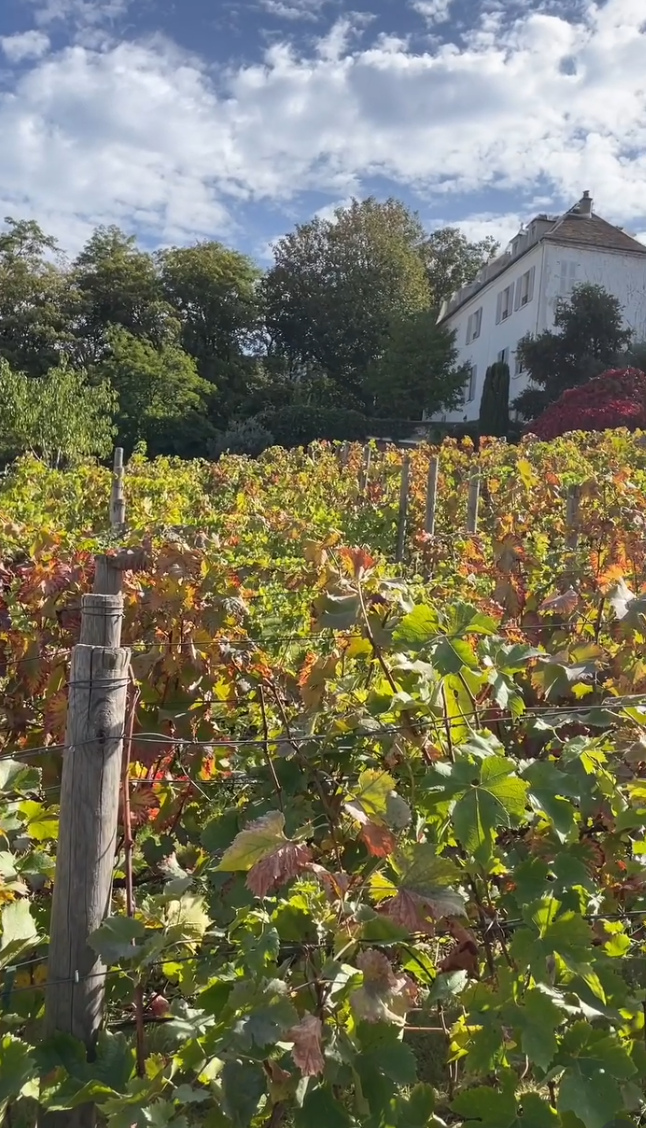
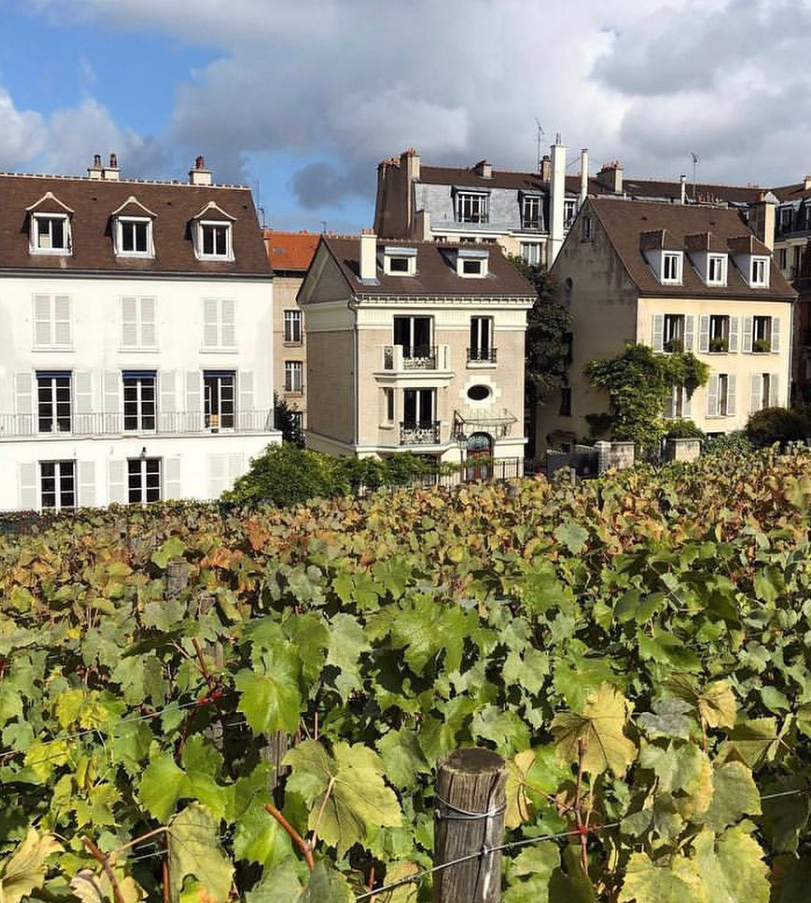
We wander down toward the Clos Montmartre, the last working vineyard in Paris. The vines sit neatly on the hillside, a patchwork of green that feels impossibly rural for the middle of the city. Around the corner, Rue Saint‑Vincent and Rue des Saules meet in a quiet embrace, the cobblestones still damp from the night.
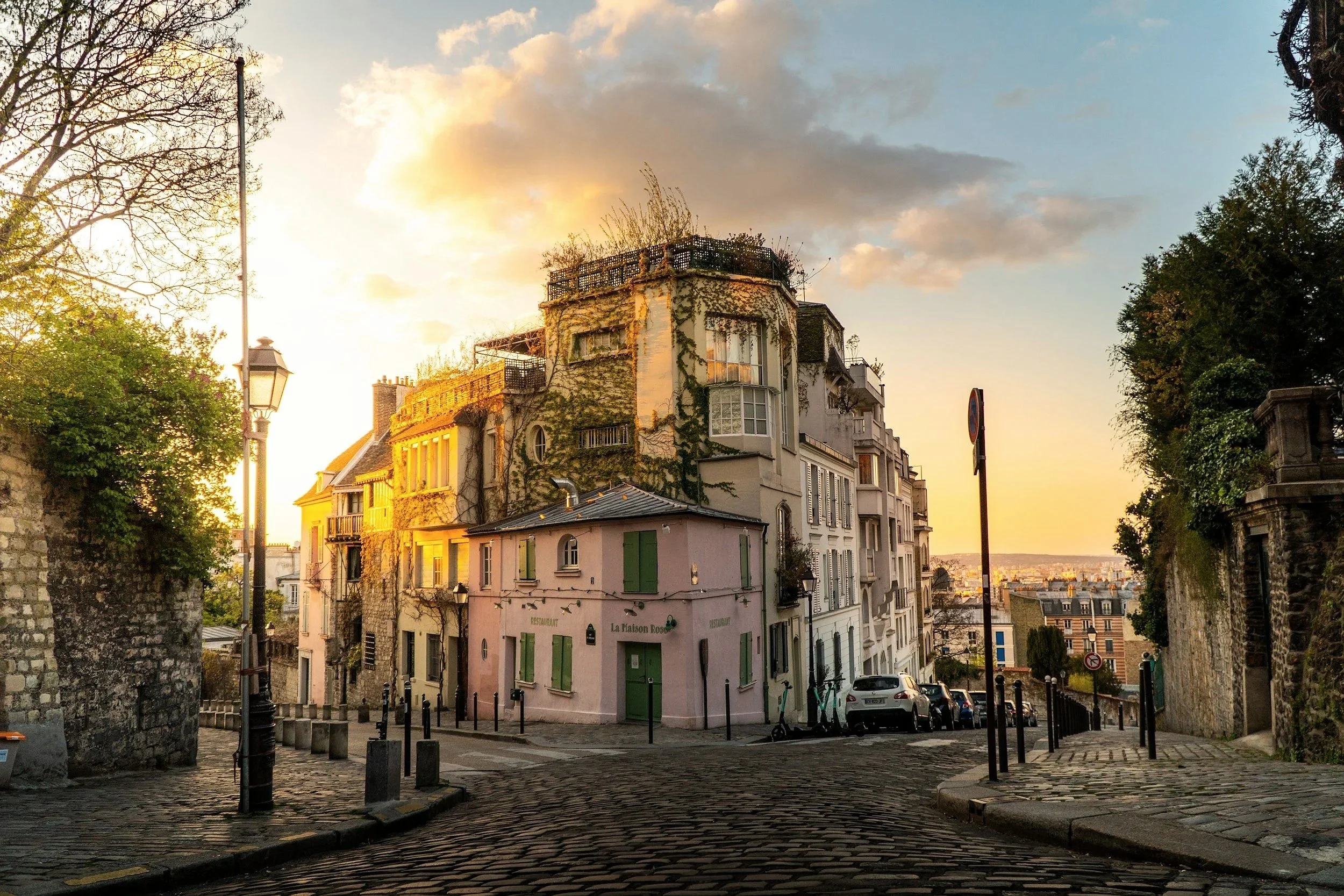
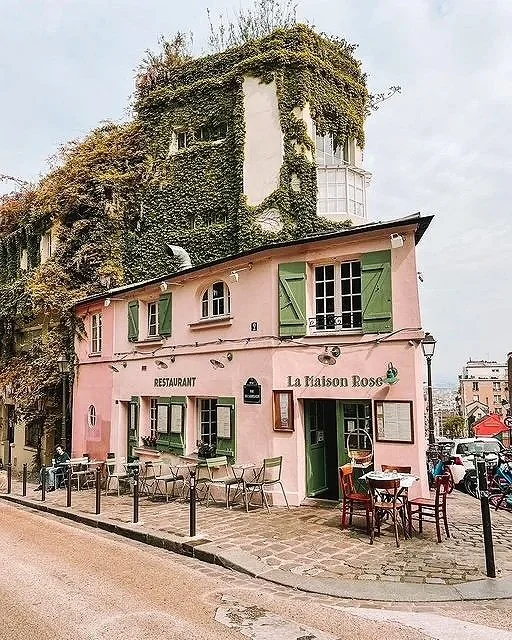
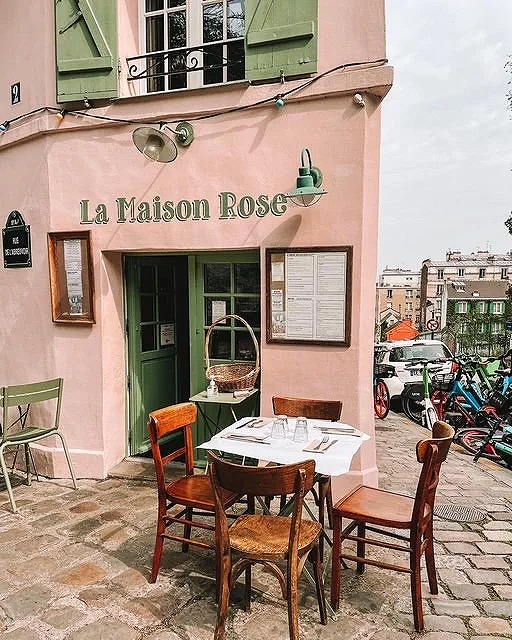
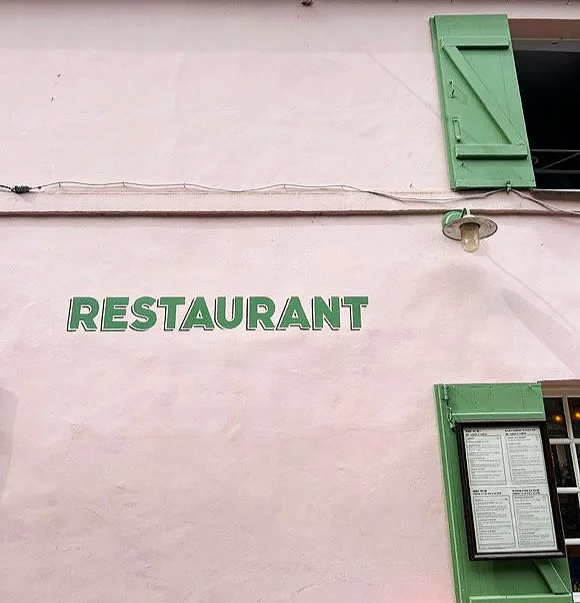
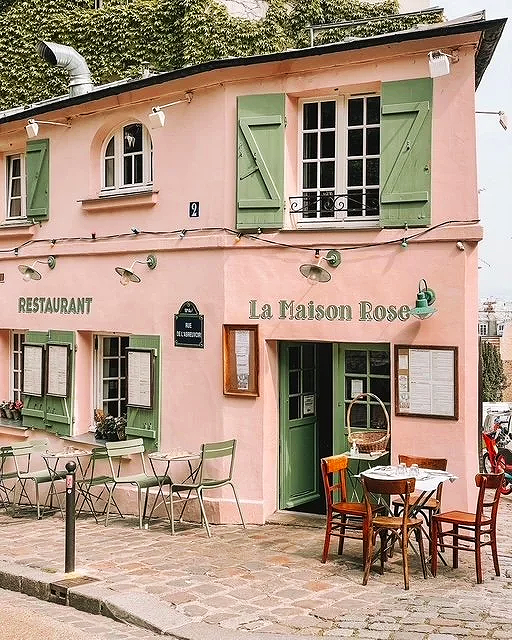
A few steps further and La Maison Rose appears — that iconic blush‑pink café perched at the bend of Rue de l’Abreuvoir, arguably the prettiest street in Montmartre. The shutters are still closed, the chairs stacked, the whole scene washed in the softest morning light. It feels like walking through a painting. We linger for a moment, unhurried, watching the quiet choreography of the morning unfold — a waiter unlocking the door, chairs unstacked one by one, the first clatter of cups drifting into the street. There’s something tender about witnessing a place wake up, as if you’ve been invited behind the curtain before the day begins.
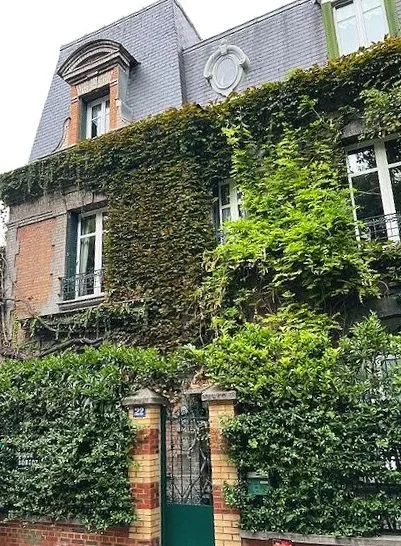
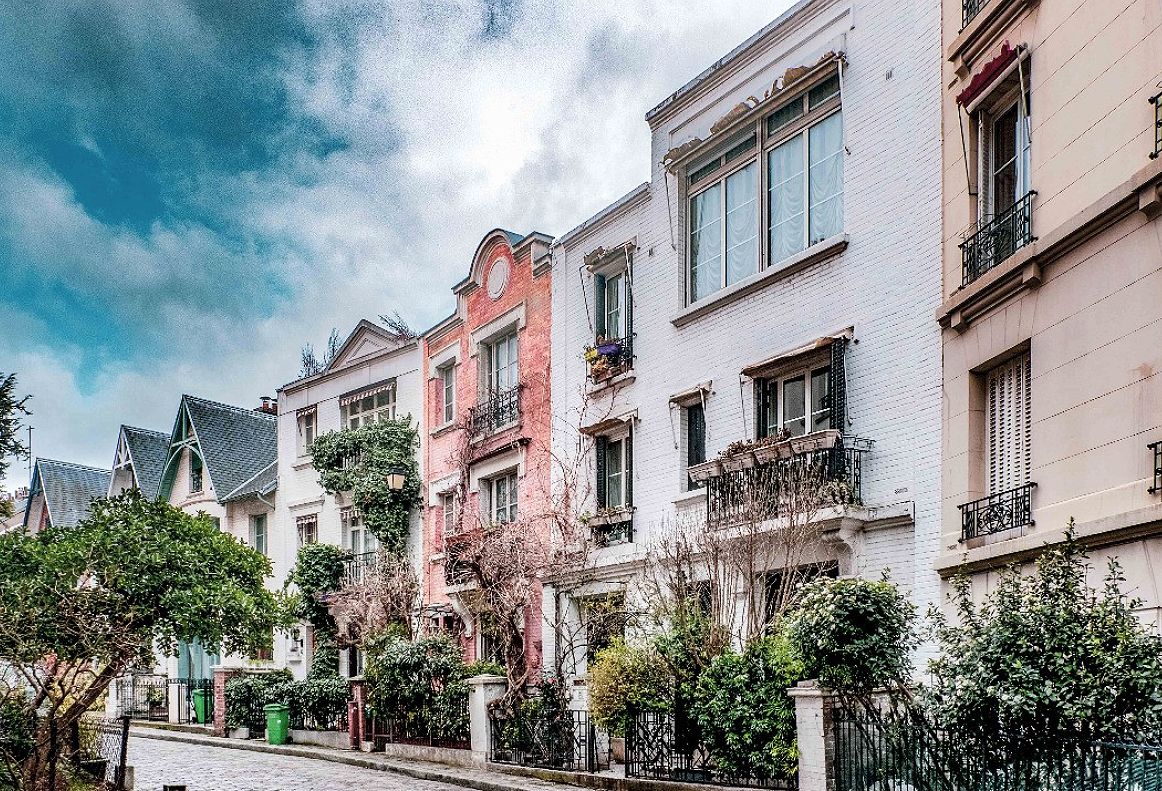
At Place Dalida, the bronze statue catches the first sun, and for a moment the square is entirely ours. Around the corner, the hidden cul‑de‑sac of Villa Léandre waits — a row of English‑style houses so charming and improbable it feels like a film set.
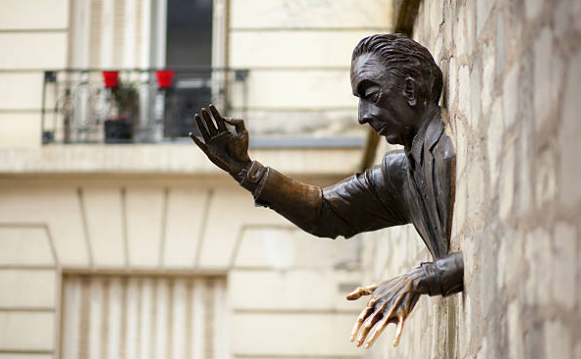
Just beyond, we stop at Le Passe‑Muraille, the whimsical sculpture of a man stepping through a wall — a surreal, very Montmartre moment that always makes us smile.
A few minutes later, Square Suzanne Buisson offers a leafy pause, its statue of Saint Denis holding his head a reminder that Montmartre’s history is as dramatic as its hills.
Renoir’s Gardens and the Artist’s Hill
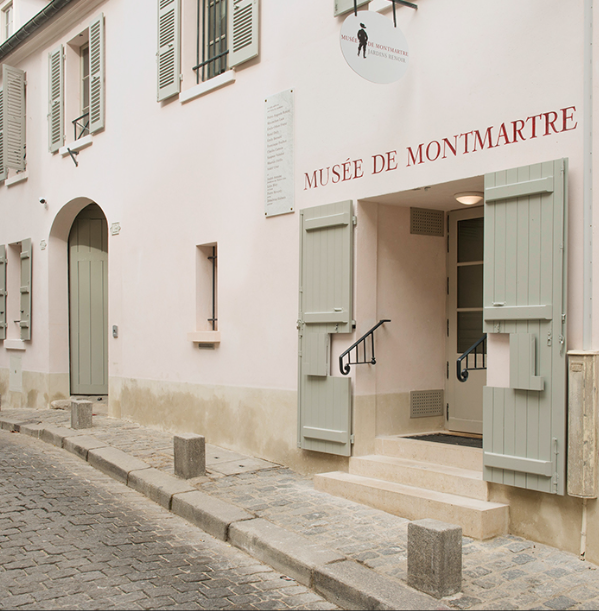
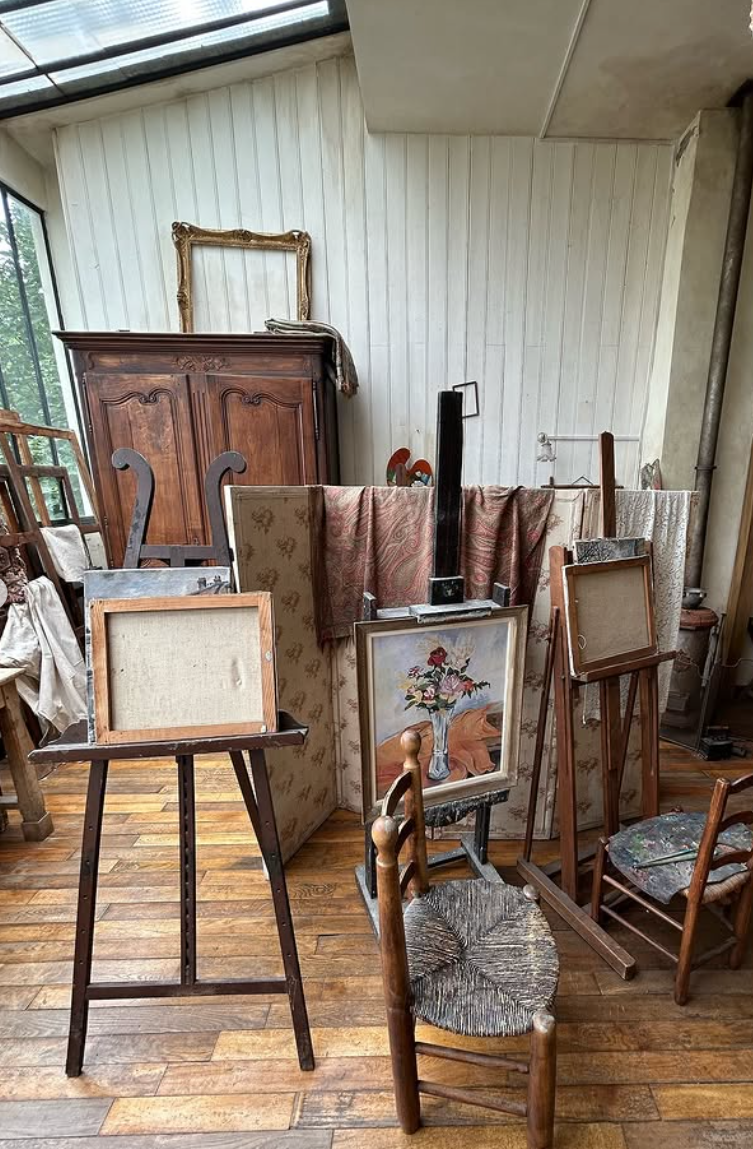
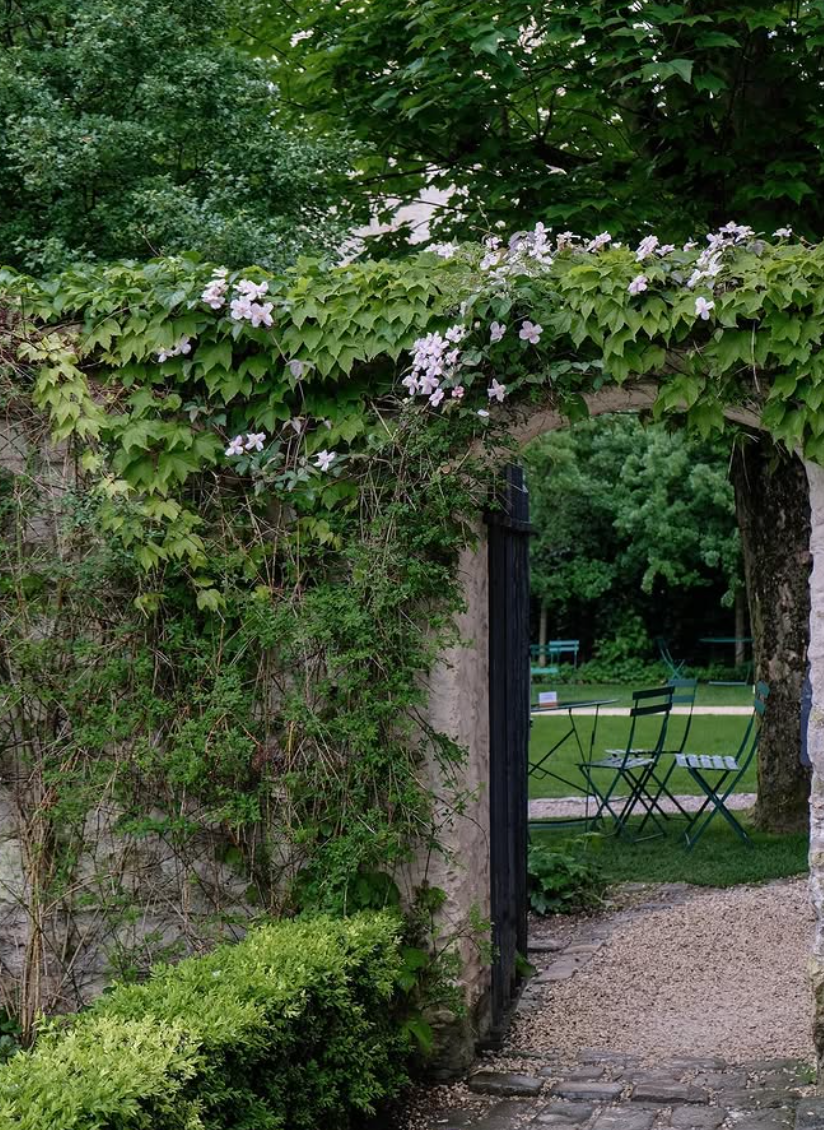
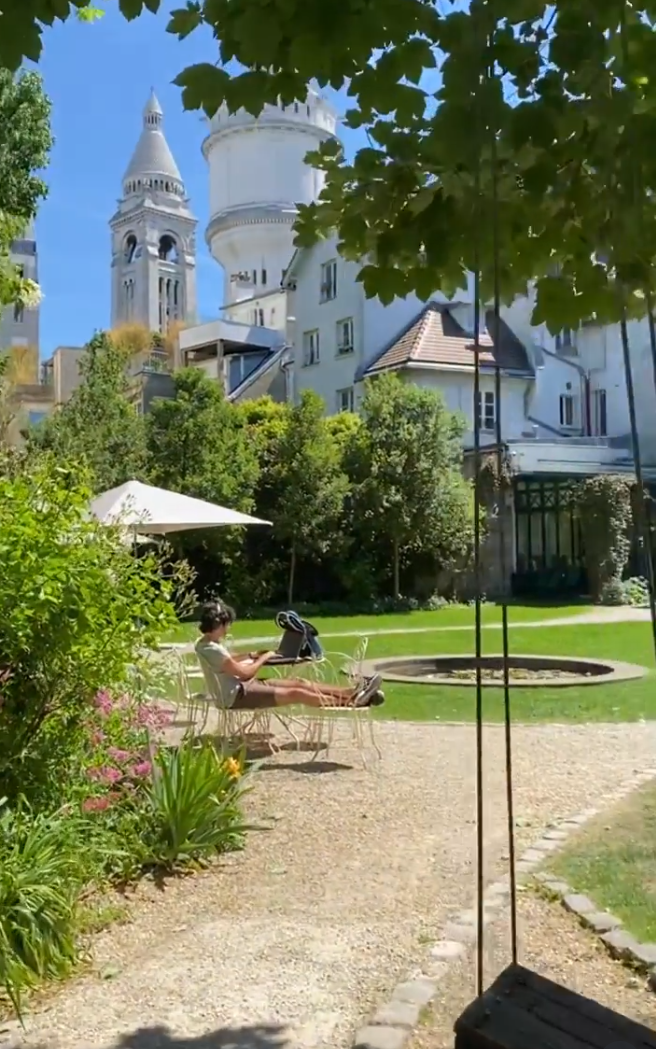
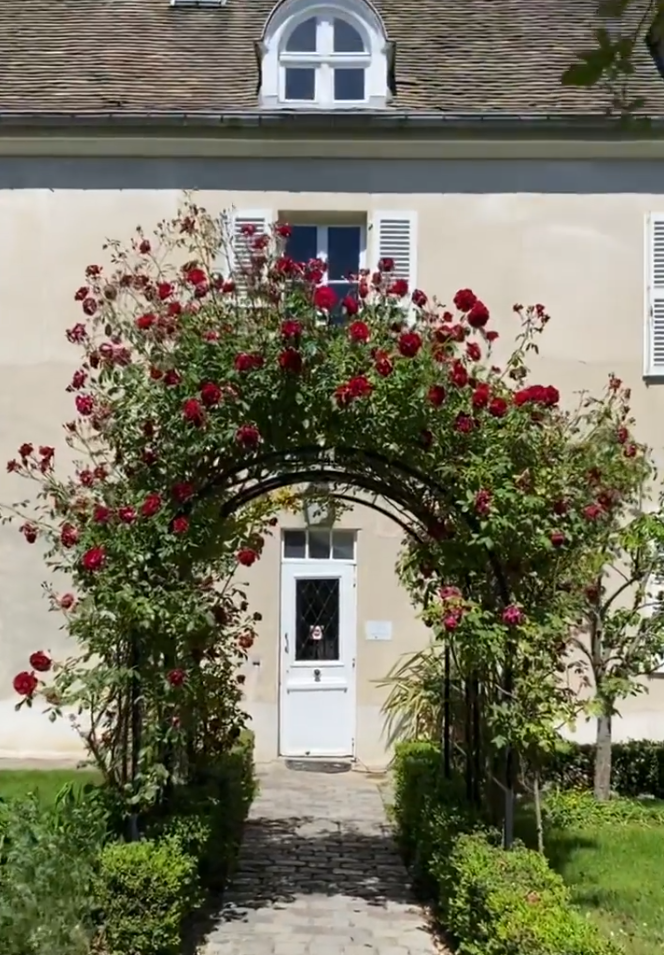
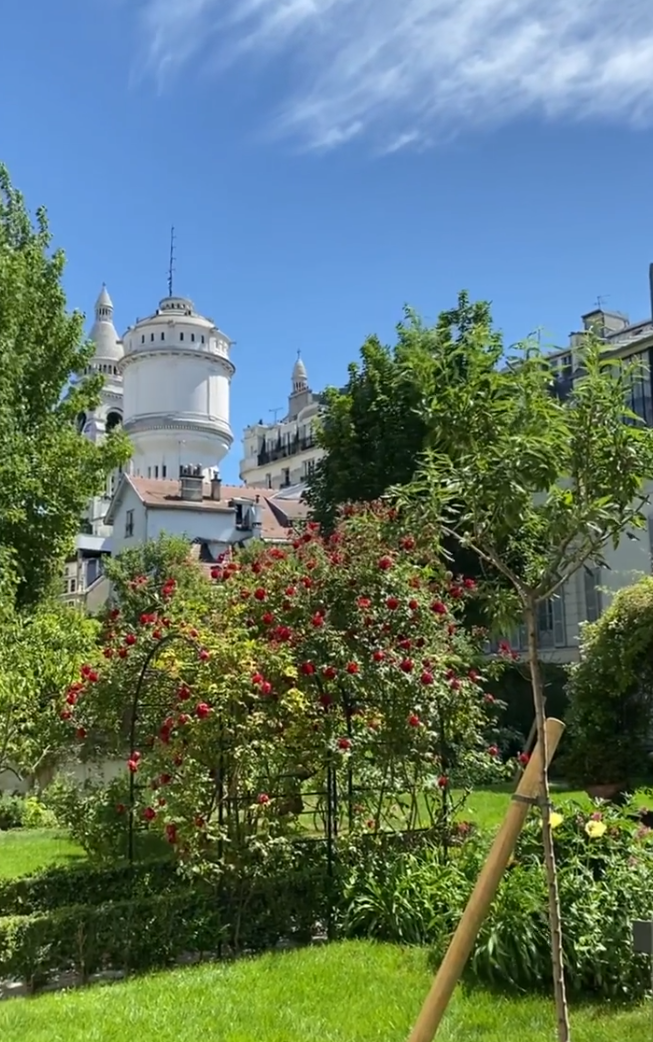
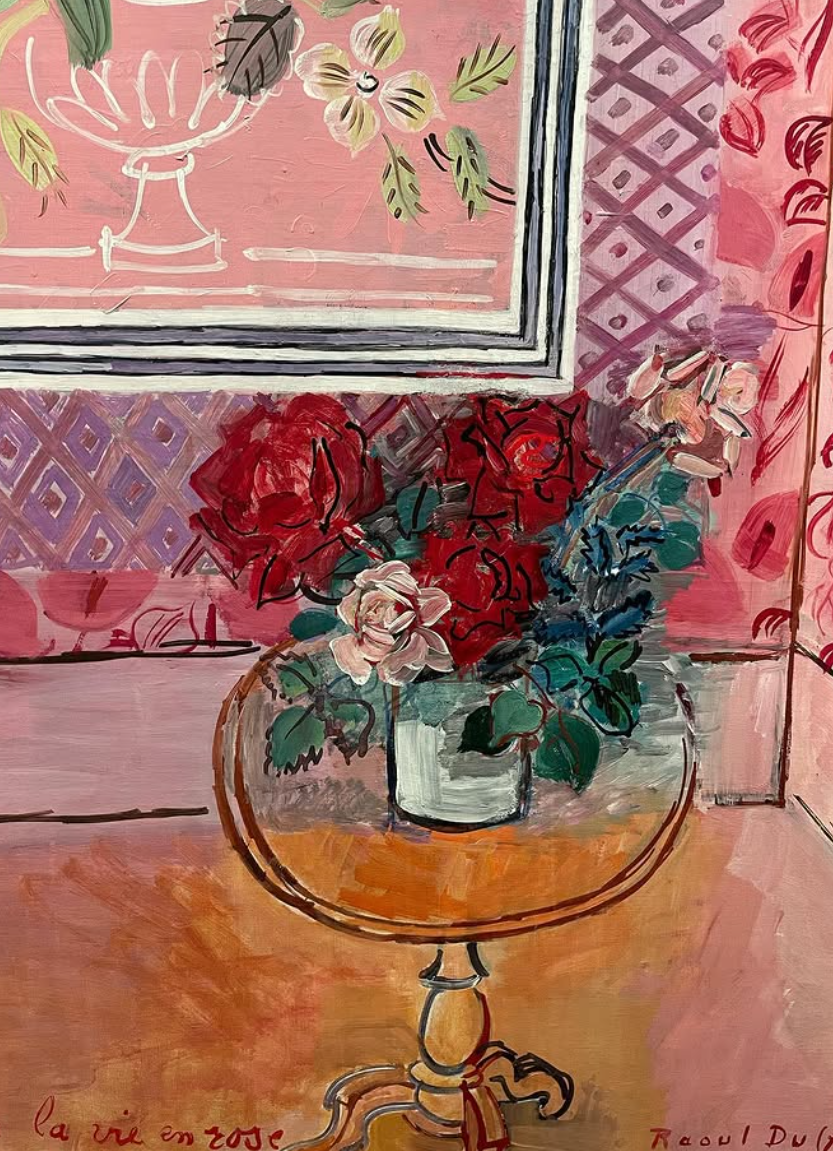
We continue toward the Musée de Montmartre, tucked behind a courtyard of ivy and old stone. Renoir once painted here, and his gardens remain — gravel paths, rose bushes, and a view over the vineyard that feels like stepping into an Impressionist canvas. The air is cool, fragrant, still.
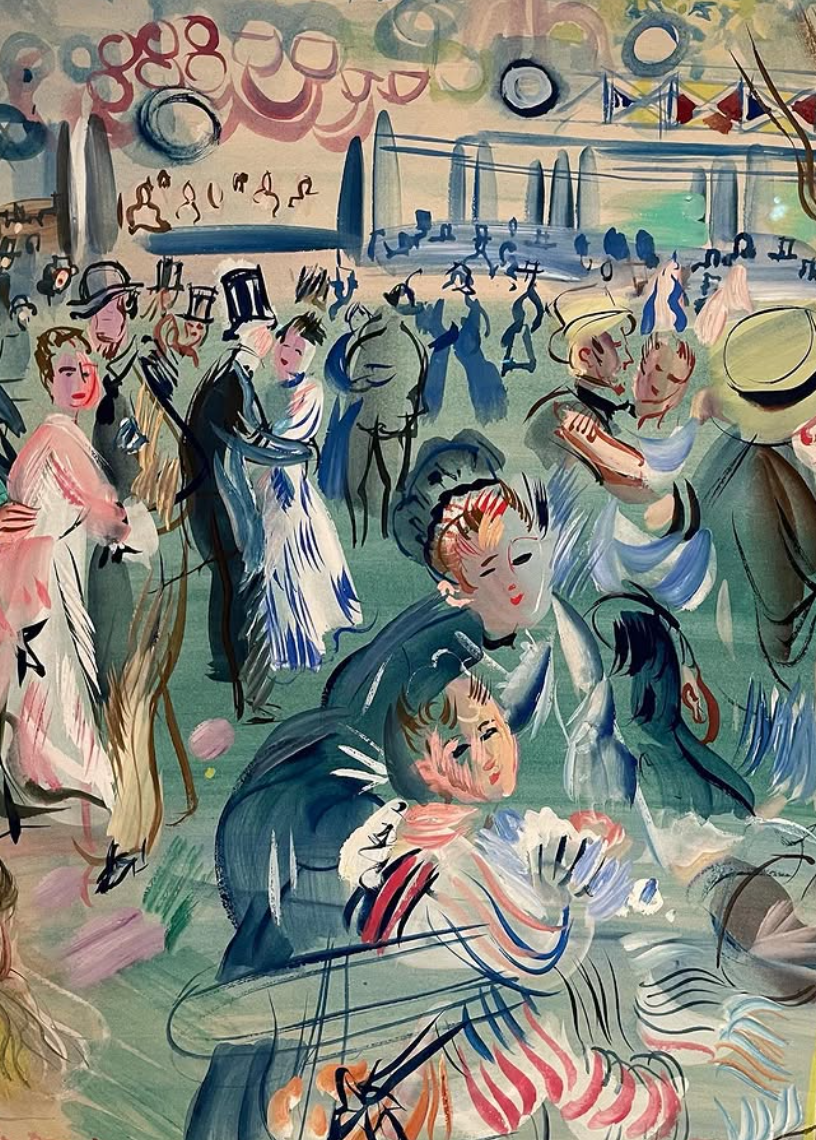
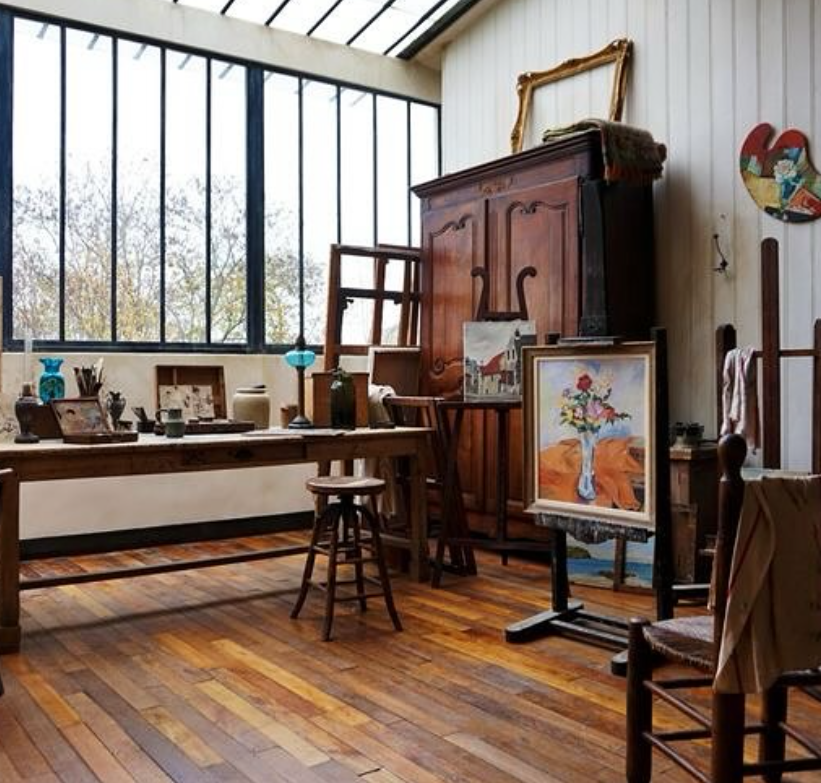
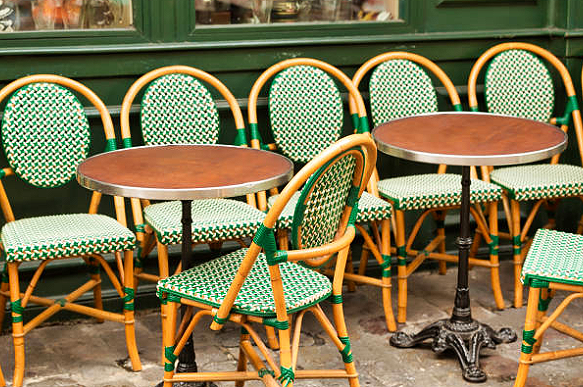
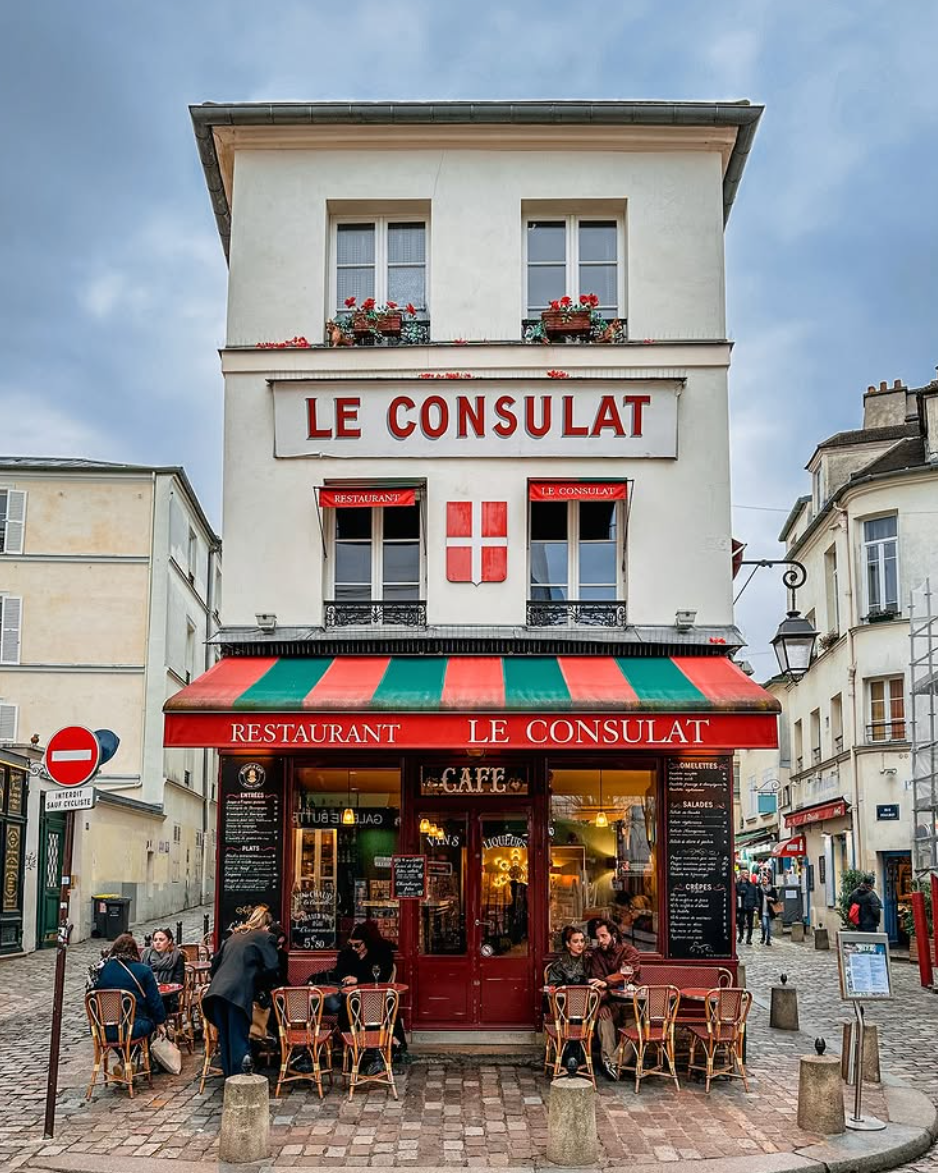
From here, the hill begins to hum. At Le Consulat, the most photographed café in Montmartre, the chairs are being set out for the day. Picasso, Monet, and Van Gogh once sat here, and somehow you can feel it — the weight of all that creativity lingering in the air. The cobblestone laneways on either side are still empty, the shutters just beginning to lift.
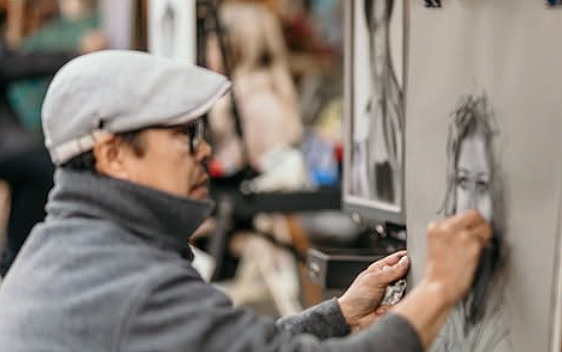
A few minutes later we reach Place du Tertre, the artists’ square. The easels are being unfolded, the canvases propped up, the first strokes of charcoal marking the day’s beginning. We pause at Chez la Mère Catherine, where the tables are being wiped down and the scent of coffee drifts into the square.
Windmills, Hidden Staircases, and Village Streets
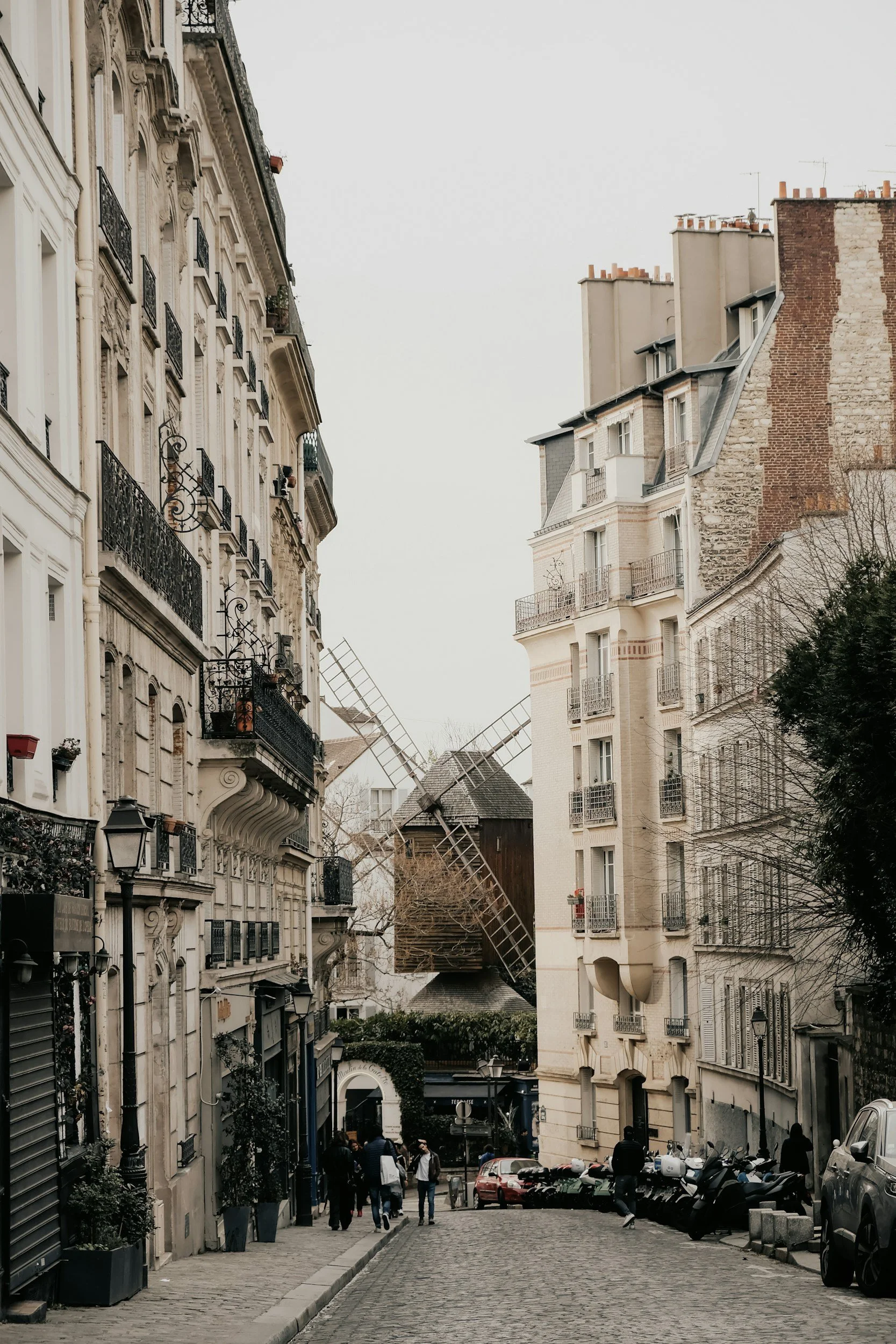
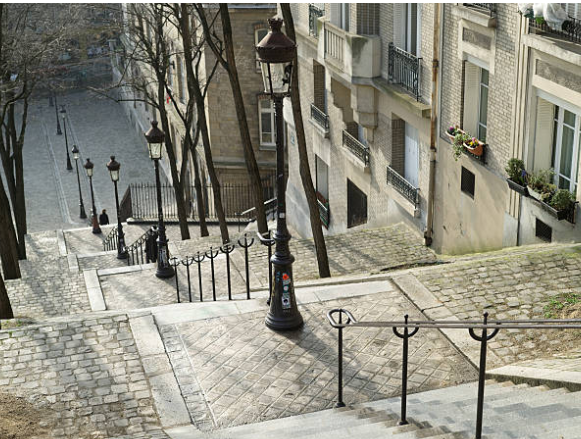
Descending toward Rue Lepic, the last remaining Montmartre windmills appear — relics of another era, standing quietly above the street. We slip down one of the hidden staircases — the Escalier du Calvaire, steep and dramatic, almost always empty — before rejoining the street near Café des Deux Moulins, made famous by Amélie.
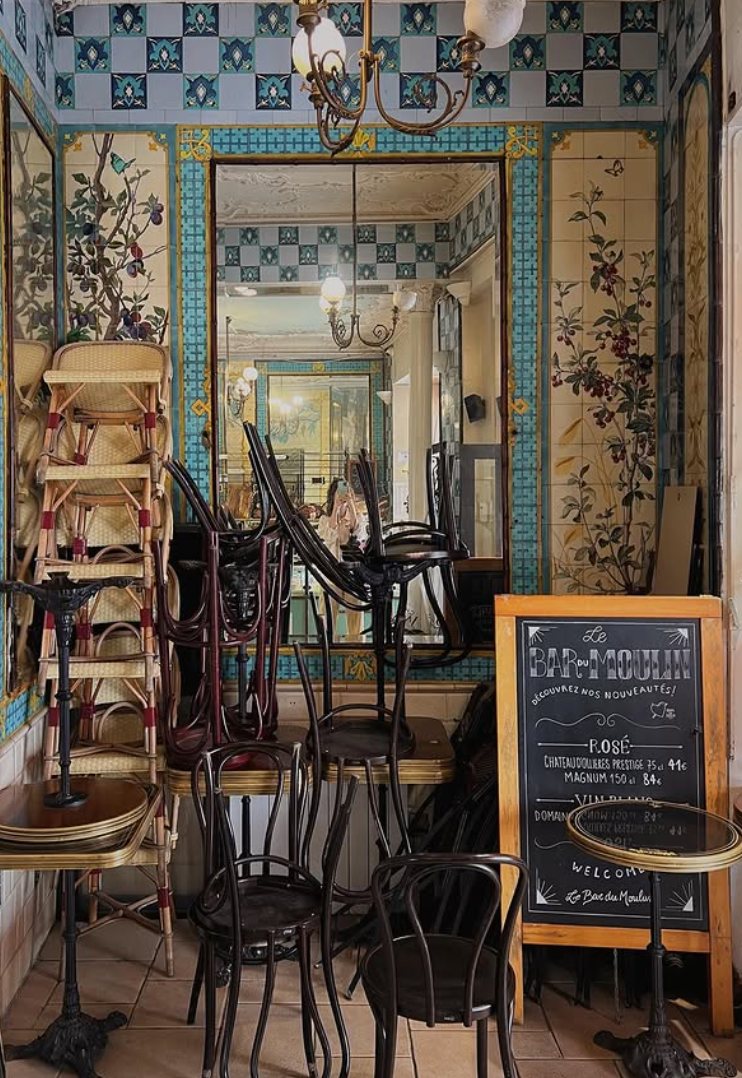
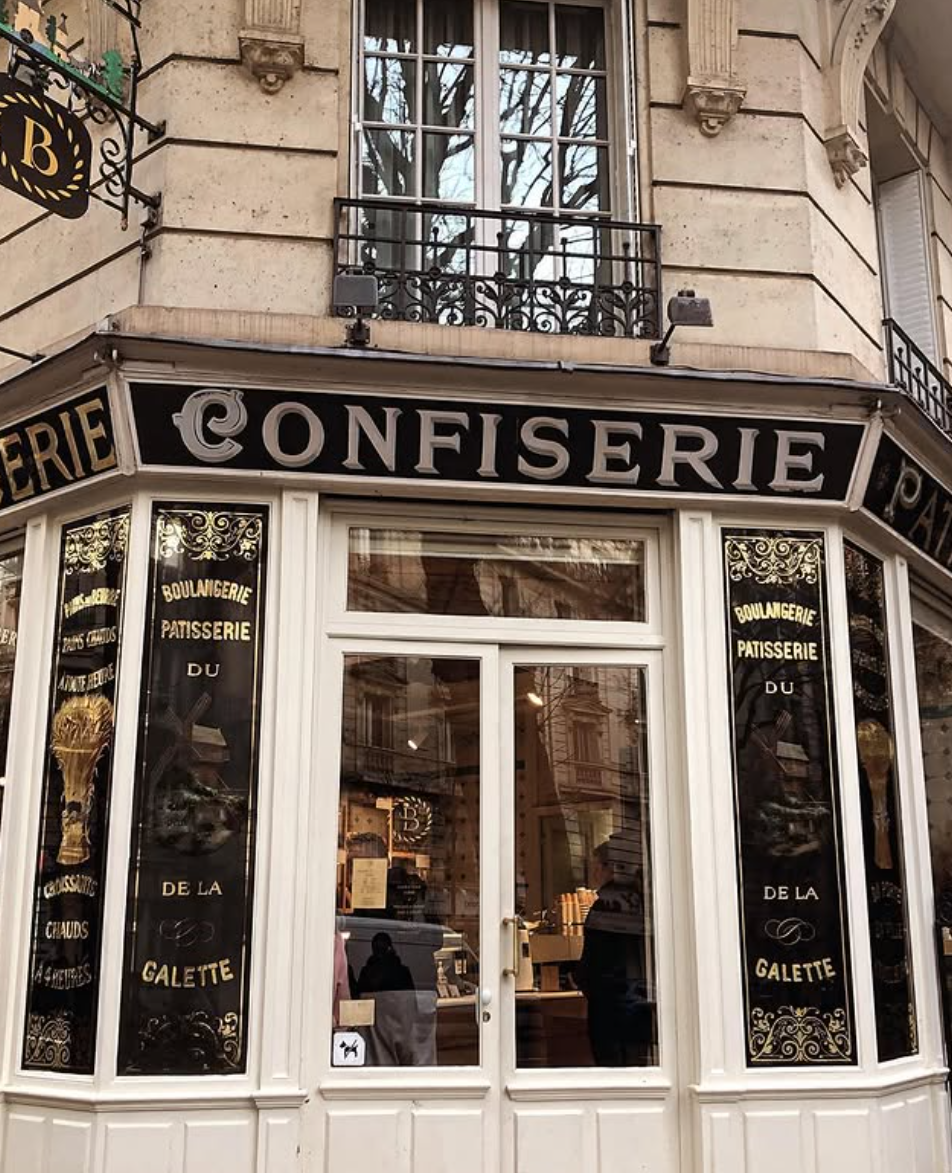
Further down, Boulangerie Boris Lumé glows with its Art Nouveau façade, the pastries inside arranged like jewels. It’s impossible not to stop.
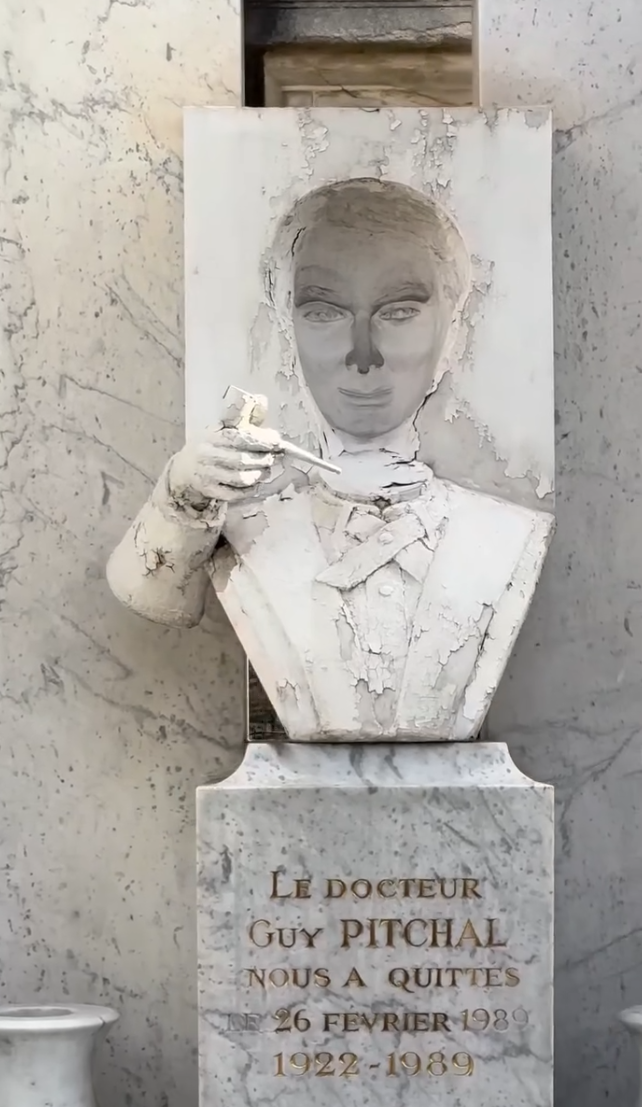
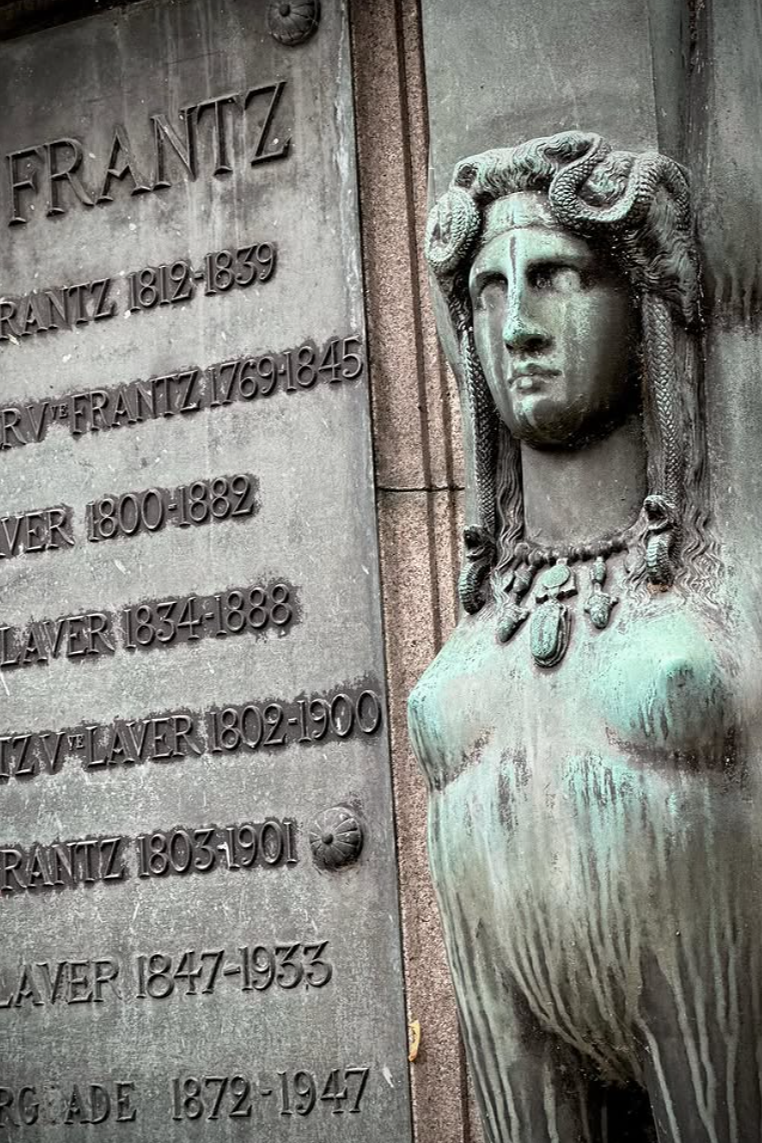
If we have time, we wander through the Montmartre Cemetery, where stone angels lean gently and cats weave between the graves. It’s peaceful, contemplative — a soft counterpoint to the brightness of the hill.
Love Walls, Markets, and Morning Treats
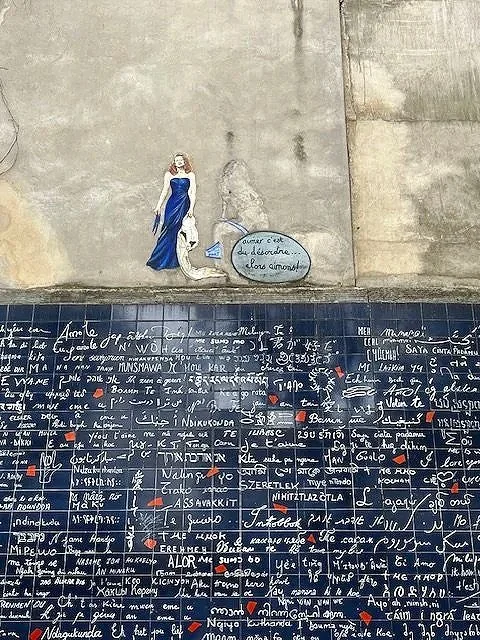
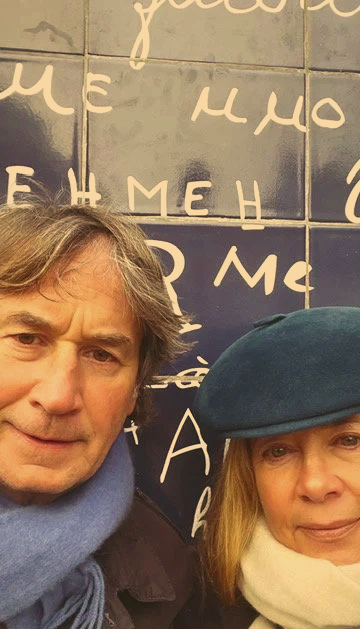
At Place des Abbesses, the I Love You Wall glows a deep blue in the morning light. The surrounding garden, Square Jehan‑Rictus, is peaceful at this hour, the benches still empty, the air cool beneath the trees.
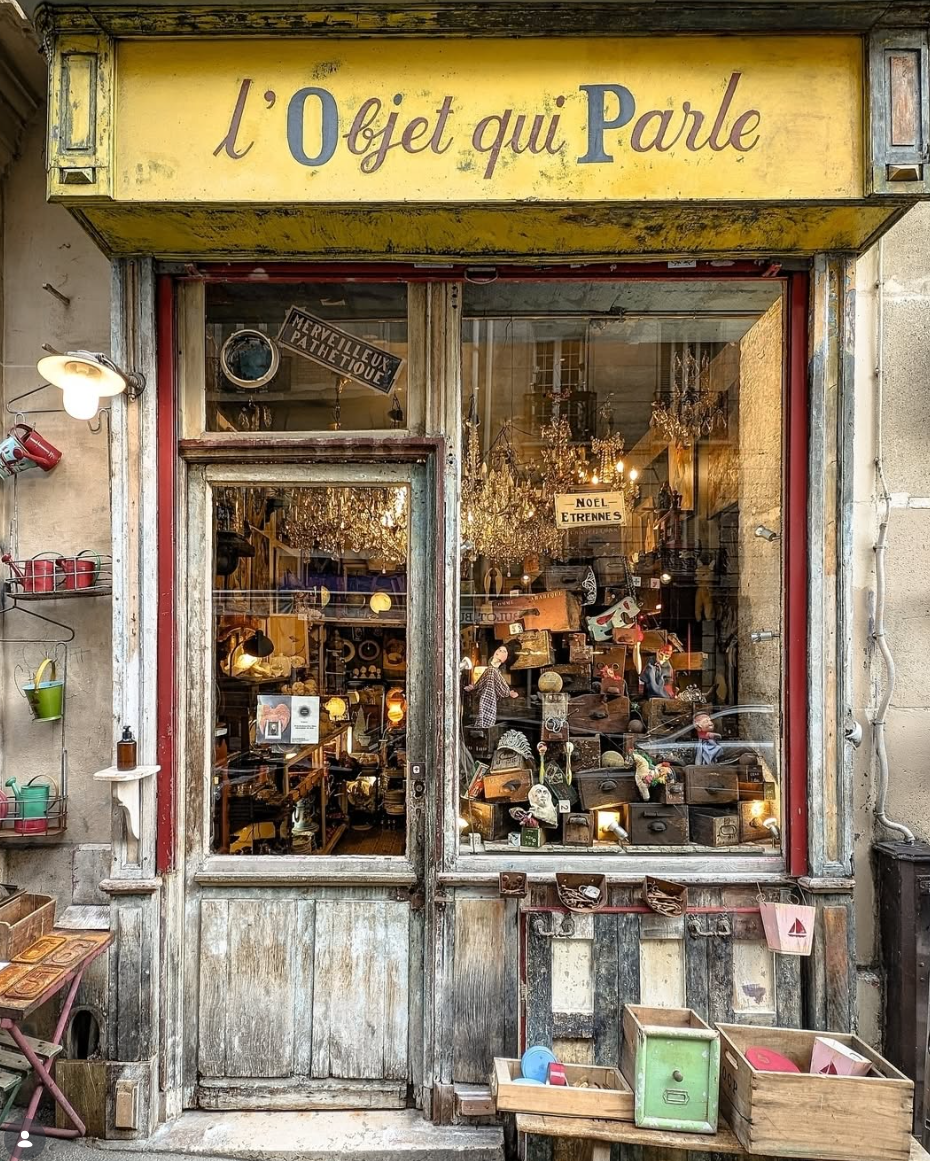
From here, Rue des Martyrs pulls us downward — a long, elegant street lined with independent boutiques and bakeries. We stop at Emmanuelle Zysman for jewellery that feels like poetry, then at L’Objet qui Parle, a tiny treasure trove of antiques and curiosities.
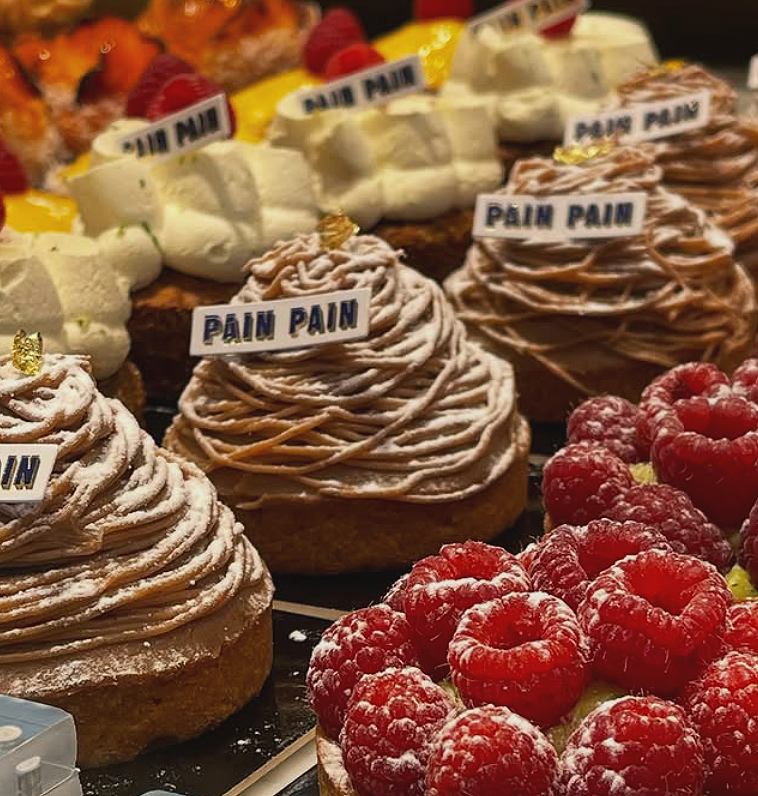
Further along, Pain Pain tempts with its award‑winning pastries, and Fromagerie Beillevaire offers a cheese counter so beautiful it feels like a gallery.
The street smells of butter and warm bread; the day is fully awake now.
A Romantic Finish
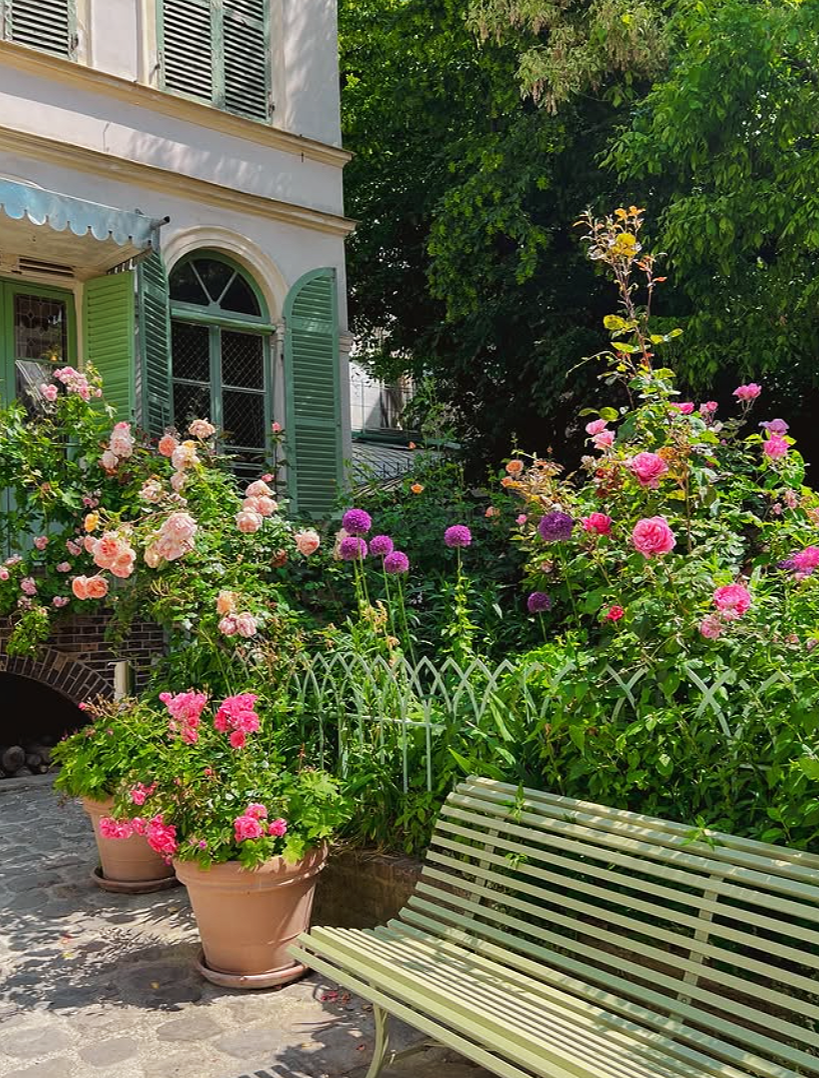
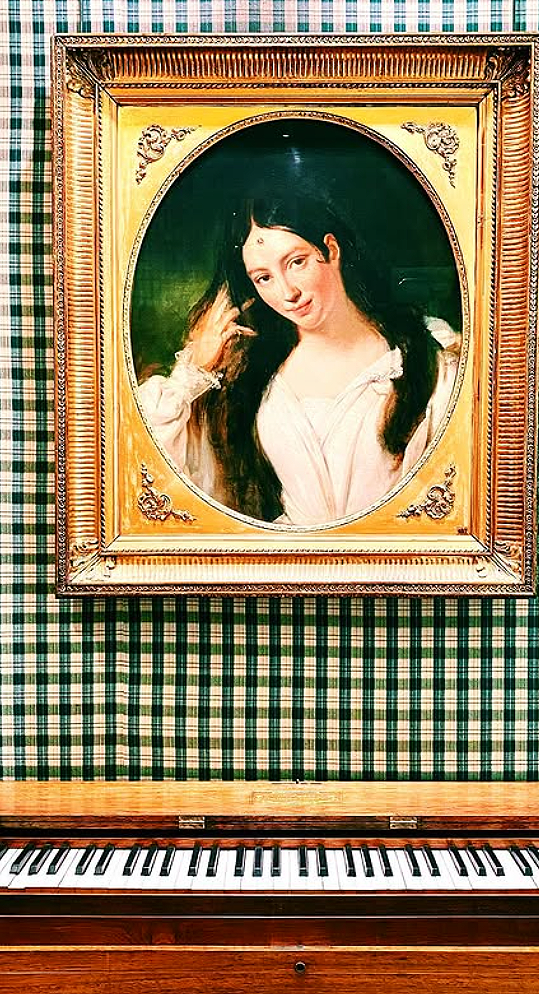
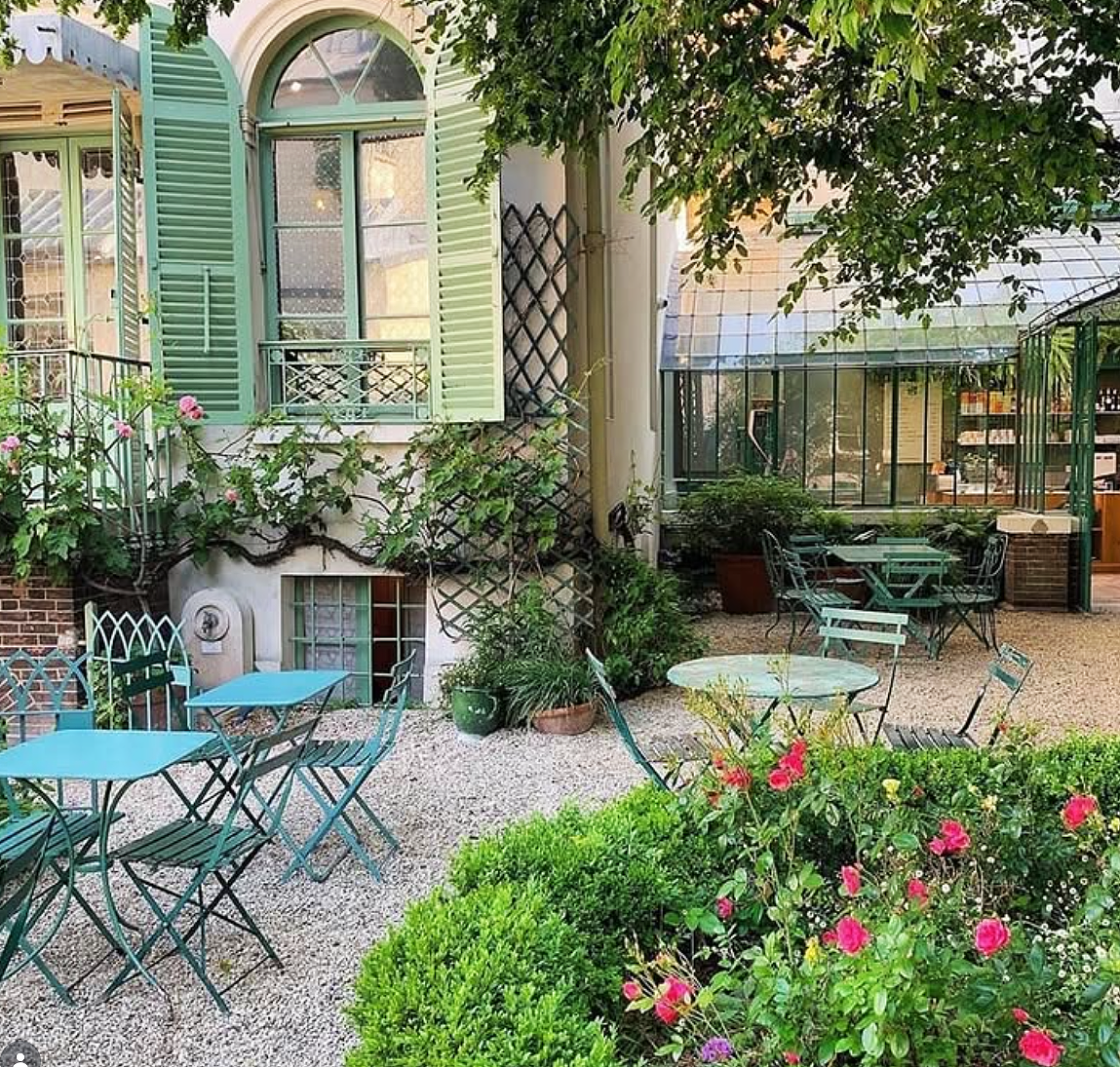
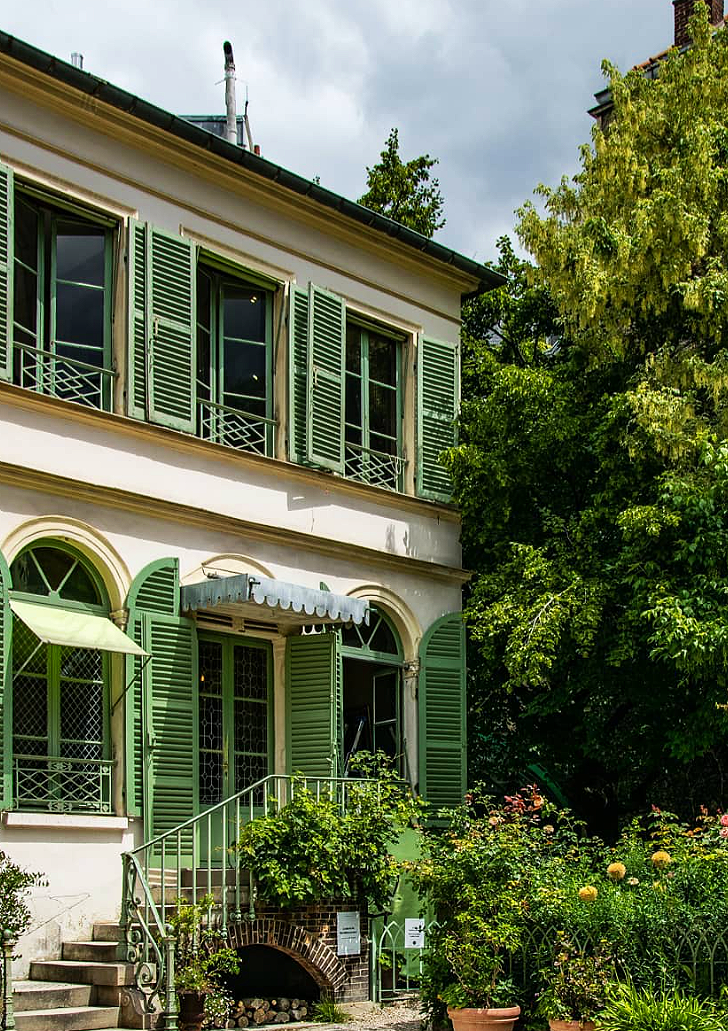
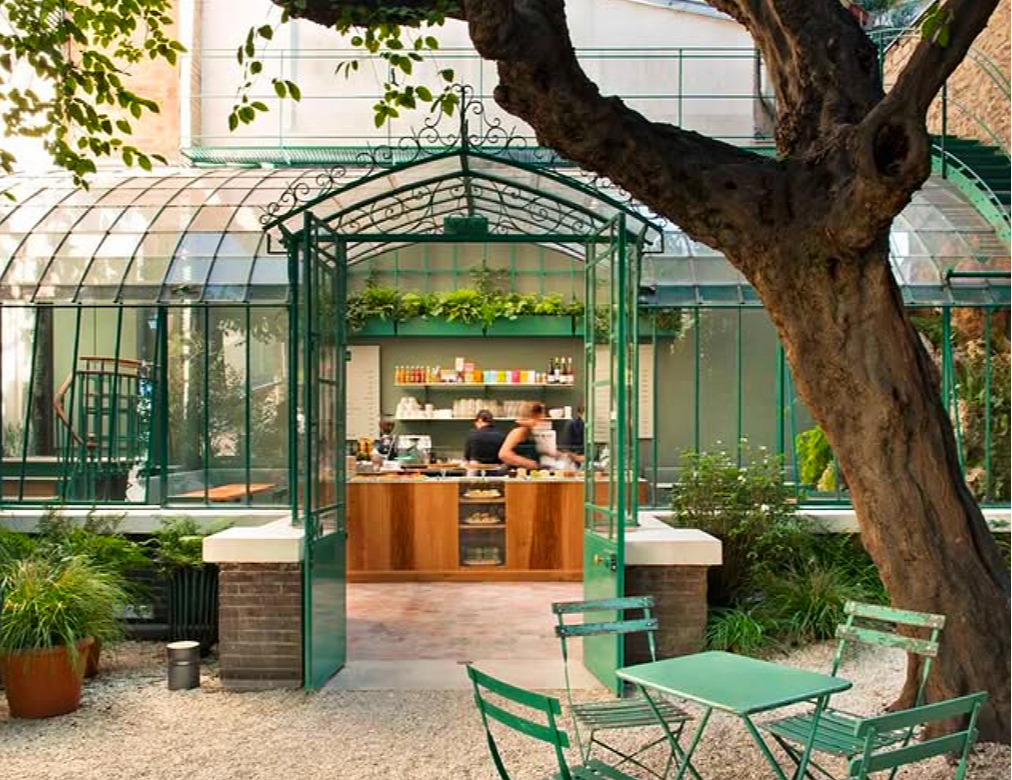
We end our walk at the Musée de la Vie Romantique, tucked behind a courtyard of gravel and greenery. The shutters are painted a soft green, the garden quiet, the café tables waiting beneath the trees. It is the perfect place to pause — to let the morning settle, to breathe in the romance of it all, to remember why we always begin our Paris days this way.
Because Montmartre at dawn is not just a neighbourhood. It is an awakening — of the city, of the senses, of ourselves.